Pregnancy is one of life’s most meaningful journeys. Over the course of nine months, your body undergoes remarkable changes, and your baby develops from a tiny embryo to a fully formed newborn ready to meet the world. With so much happening, it’s easy to feel overwhelmed—especially when managing medical appointments, physical changes, and emotional shifts simultaneously.
The good news? Keeping track of your pregnancy week by week doesn’t have to be complicated. In fact, organizing your pregnancy journey with a thoughtful tracking system can help you feel more in control, catch important patterns, and get the most out of every healthcare visit. This guide walks you through what to track, when to expect major changes, and how to stay organized throughout your entire pregnancy.
Why Tracking Your Pregnancy Matters
Jump in: the tool below is live and free to play with. Upgrade to a dashboard account when you want to save scenarios and track over time.
Before diving into the specifics of what to track, let’s talk about why pregnancy tracking is so valuable. Many pregnant women feel a sense of anxiety about the unknown—wondering if what they’re experiencing is normal, whether they’re doing everything right, and how they’ll manage all the appointments and information.
A pregnancy tracker does something powerful: it transforms that vague worry into actionable insight.
- Catching patterns: By tracking symptoms, energy levels, sleep, and mood, you’ll notice patterns that might indicate important information to discuss with your provider. Maybe you realize you’re more fatigued on days you skip prenatal vitamins, or that certain foods trigger nausea.
- Communicating effectively: Walking into appointments with organized notes means you won’t forget important symptoms or questions. Your healthcare provider gets a clearer picture of your experience, leading to better care.
- Reducing anxiety: There’s something calming about writing things down. It externalizes your concerns and gives you a concrete way to see that most experiences are within normal pregnancy ranges.
- Building your birth story: Your pregnancy tracker becomes a cherished record—a journal of this special time that you’ll treasure for years to come.
Research shows that patients who actively engage in their healthcare (including tracking and journaling) report higher satisfaction with their care and better health outcomes overall.
The Three Trimesters: What to Expect and How to Track
Your 40-week pregnancy is typically divided into three trimesters, each marked by distinct changes for both you and your baby.
First Trimester (Weeks 1-13): Foundation and Adjustment
The first trimester is a time of profound change, though many of these changes happen invisibly. Your baby grows from a single cell to approximately 3 inches long, complete with a heartbeat, limbs, and recognizable facial features.
-
Hormonal surges trigger nausea, fatigue, and breast tenderness
-
Your heart rate increases to pump more blood
-
Mood shifts become noticeable
-
You may experience food aversions or cravings
-
Frequent urination becomes the new normal
-
Nausea patterns (time of day, food triggers)
-
Energy levels and fatigue
-
Mood and emotional changes
-
Any unusual cramping or spotting
-
Food cravings and aversions
-
Sleep patterns and quality
-
Medication or supplement use
The first trimester is when you’ll schedule your first prenatal appointments and initial ultrasound, typically around 8-12 weeks. This is also when many women choose to make their pregnancy public, though timing is entirely personal.
Second Trimester (Weeks 14-27): The “Honeymoon” Trimester
Many women describe the second trimester as the easiest—and for good reason. Morning sickness often subsides, energy returns, and you’ll start feeling the baby move, which creates a tangible connection that makes pregnancy feel real.
-
Energy and appetite return
-
“The glow” becomes a real thing as your skin improves
-
Weight gain accelerates (expect 3-4 pounds per week)
-
You may experience back pain as your center of gravity shifts
-
Linea nigra (dark line on the belly) and other skin changes appear
-
Braxton Hicks contractions may begin (painless, practice contractions)
-
By 20 weeks, baby is approximately 10 inches and weighs about 10 ounces
-
Baby can hear you, taste amniotic fluid, and respond to light
-
Fingerprints and unique features develop
-
Baby begins moving in ways you can feel
-
Baby’s movement patterns (when you feel flutters, how active baby is)
-
Weight gain and measurements
-
Energy levels
-
Back or hip pain
-
Braxton Hicks contractions (frequency and what triggers them)
-
Appetite and nutrition
-
Sleep quality
-
Mood and emotional wellbeing
-
Skin changes and any concerns
This is the ideal time to invest in a comprehensive pregnancy week by week tracker that allows you to see your baby’s development alongside your own changes. Visual tracking helps you appreciate how much is happening each week.
Third Trimester (Weeks 28-40): Preparation and Anticipation
The final stretch brings new physical sensations and the reality that you’ll meet your baby soon. Your baby gains most of its weight during this trimester, growing from about 2 pounds to 7+ pounds by birth.
-
Shortness of breath as the baby takes up more room
-
Frequent trips to the bathroom
-
Swelling in feet, hands, and face
-
Leg cramps and discomfort
-
Difficulty sleeping despite exhaustion
-
Intense emotions (excitement, anxiety, nesting instinct)
-
Episodic contractions that become increasingly intense toward the end
-
Baby “drops” or engages lower in the pelvis around weeks 35-37
-
Baby’s movements feel different (rolls rather than kicks) due to limited space
-
Baby assumes head-down position in preparation for birth
-
Baby can regulate its own body temperature
-
Contraction timing and intensity (this becomes crucial as you approach due date)
-
Fetal movement (you should feel consistent movement daily)
-
Blood pressure and any swelling
-
Weight changes
-
Sleep and rest quality
-
Energy level and nesting activity
-
Mood and feelings about impending labor
-
Any warning signs to discuss with your provider
Interactive pregnancy dashboards are especially valuable in the third trimester because they allow you to track contractions, monitor baby’s movement, and even visualize your hospital bag packing progress—all in one organized place.
What to Track Each Week: A complete guide
| Option | Cost | Time Investment | Customizable? | Best For |
|---|---|---|---|---|
| DIY approach | Free | High | Fully | Those with time to build from scratch |
| Generic tool | $5-$50/mo | Medium | Limited | Standard use cases |
| DDH Free Tool | Free trial | 5-10 min setup | Yes | Getting real answers without spreadsheet hell |
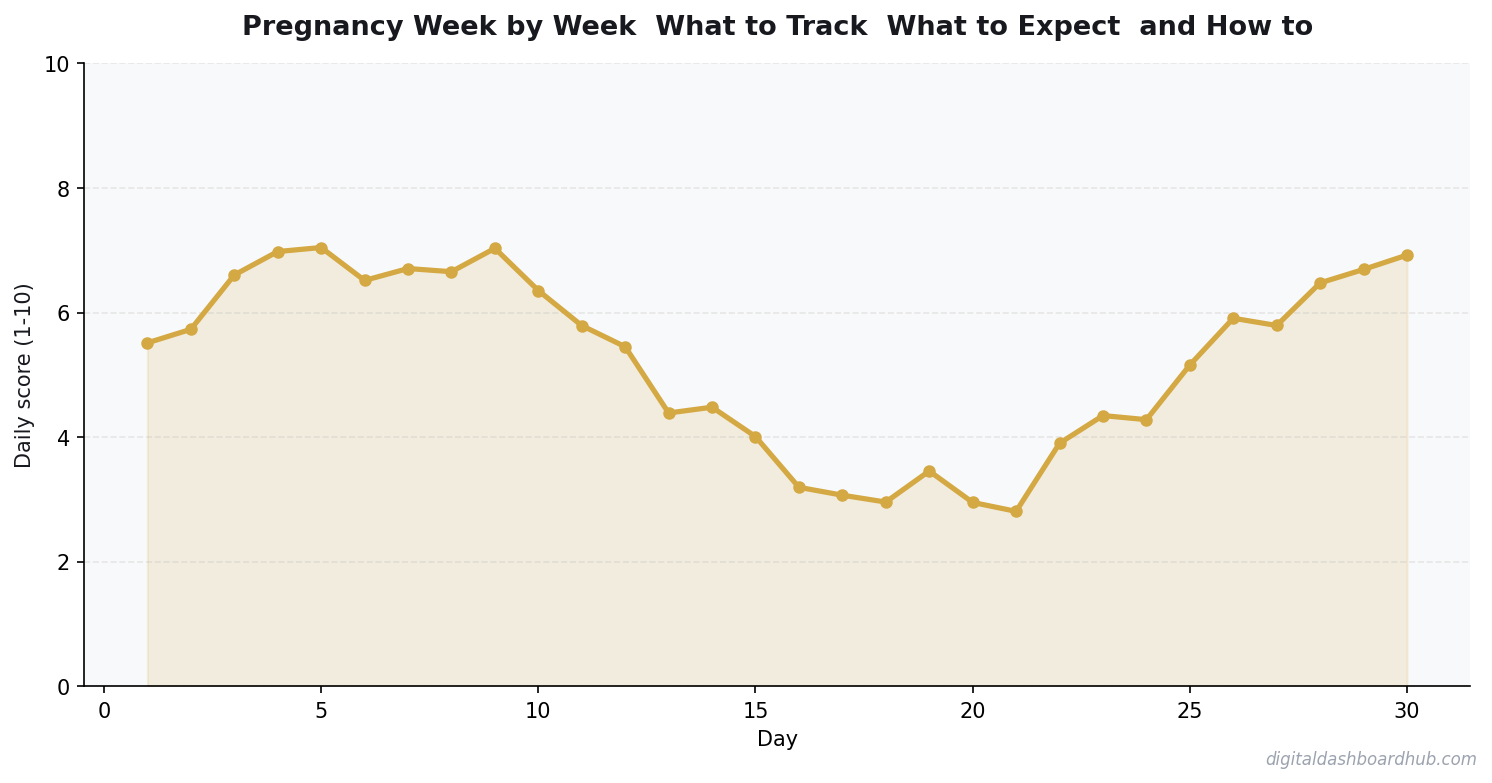
While each pregnancy is unique, tracking these elements on a weekly basis creates a complete picture of your experience:
Physical Symptoms
- Nausea, vomiting, or heartburn (including severity and triggers)
- Headaches or dizziness
- Back, hip, or pelvic pain
- Swelling or fluid retention
- Skin changes
- Varicose veins or other circulation changes
Mood and Mental Health
- Overall emotional state
- Anxiety levels
- Stress and stressors
- Sleep quality and quantity
- Energy level
- Any signs of depression or perinatal mood changes
Nutrition and Wellness
- Daily water intake
- Prenatal vitamin compliance
- Meals and any food aversions
- Cravings satisfied or avoided
- Exercise or movement
- Caffeine and other substance use
Measurements
- Weight (ideally weekly, tracked consistently)
- Blood pressure (if home monitoring)
- Fundal height notes (measured by your provider at appointments)
Baby-Related
- First movements (quickening) date
- Patterns of movement and activity
- Response to stimuli (music, food, position changes)
Tracking these elements reveals personal patterns unique to your pregnancy. You might discover that you sleep better when you limit screens after 8 PM, or that specific foods trigger nausea while others ease it. This self-knowledge empowers you to make choices that support your wellbeing.
Appointment Tracking and Preparation
Standard prenatal care follows a predictable schedule, though your provider may adjust based on your individual circumstances.
Standard Appointment Schedule
-
Initial visit (6-8 weeks): History, physical exam, labs, first ultrasound
-
Follow-up visits: Monthly, focusing on symptom review and vital signs
-
Continuing monthly visits
-
Anatomy ultrasound (18-22 weeks): Detailed fetal assessment
-
Glucose screening (24-28 weeks): Screen for gestational diabetes
-
Visits increase to every 2 weeks from 28-36 weeks
-
Weekly visits from 36 weeks until delivery
-
Group B Streptococcus screening (35-37 weeks)
What Tests to Expect
Understanding what each test screens for reduces anxiety:
- Blood pressure monitoring: Screens for preeclampsia
- Urinalysis: Checks for protein and glucose
- Glucose screening: Identifies gestational diabetes risk
- GBS test: Determines if antibiotics are needed during labor
- Ultrasounds: Monitor baby’s growth and development
Track your appointments with an interactive dashboard that lets you record test results, note any abnormalities, and keep questions organized.
Preparing for Appointments
Maximize your appointments by arriving prepared:
- Write questions in advance: Keep a running list throughout the month
- Bring your tracker: Share relevant patterns and observations
- Note symptom specifics: Instead of “I’ve been tired,” note “I’m sleeping 10 hours nightly but still exhausted by 3 PM”
- Document any concerns: Heavy bleeding, severe pain, or unusual symptoms need mentioning
- Ask about results: Request explanations of test results and what they mean for you
- Discuss birth preferences: Start conversations about your vision for labor and delivery
Hospital Bag Checklist: What to Pack and When
Around week 35, it’s time to pack your hospital bag. You don’t need much—hospitals provide most necessities—but having certain items brings comfort and familiarity when you’re in labor.
For Mom
- Comfortable clothing to go home in: The outfit you wore at 6 months pregnant works perfectly
- Pajamas that open in front: For easy nursing and skin-to-skin contact
- Slippers with grip soles: For safe walking during labor
- Entertainment: Books, playlist, or shows for early labor
- Toiletries and hair ties: Items that make you feel human
- Insurance cards and ID: Non-negotiable documents
- Photos or comfort items: Something meaningful from home
For Baby
- Three to five newborn and 0-3 month outfits: Hospitals provide most clothing, but having your own feels special
- Swaddles or favorite blankets: One to keep as a keepsake
- Hat and mittens: Newborns lose heat quickly
- Mittens to prevent scratching: Essential for those tiny nails
- A special outfit for going home: Usually newborn and 0-3 month sizes
For Partner/Support Person
- Change of clothes and toiletries: You may be there overnight
- Snacks: Hospitals have food, but familiar snacks are comforting
- Phone charger: Non-negotiable in today’s world
- Camera: To capture first photos
Pack your bag by week 35 and keep it in an easily accessible spot. You don’t need an elaborate suitcase—most hospitals have limited space anyway.
Creating Your Birth Plan and Preferences Document
Your birth plan is a written statement of your preferences for labor and delivery. It’s not a contract, but rather a communication tool that helps your medical team understand what matters to you. A comprehensive birth plan addresses:
- Pain management preferences: Natural, epidural, or a combination approach
- Movement and positioning: Whether you want freedom to move, use a birth ball, shower, or walk
- Monitoring preferences: Continuous fetal monitoring or intermittent checks
- Emergency procedures: Your preferences if complications arise
- Newborn care: Skin-to-skin contact, vitamin K and eye ointment timing, circumcision if applicable
- Feeding preferences: Breastfeeding support, bottle feeding, or combination
- Who’s present: Which support people you want in the room
- After-birth practices: Delayed cord clamping, placenta examination, immediate bathing
Discuss your preferences with your provider well before labor begins. They can tell you what your hospital typically offers and negotiate differences if needed.
Building Your Tracking System
The most effective pregnancy tracker is one you’ll actually use. Whether you prefer digital tools or paper journaling, consistency matters more than perfection.
Digital options like spreadsheet-based or app-based trackers allow you to:
- Set reminders for weekly tracking
- See data visualized over time
- Share information with your healthcare provider
- Store everything organized in one place
Paper options offer:
- A tangible keepsake of your pregnancy journey
- Freedom from screen time
- A creative outlet if you enjoy writing
Many women find a pregnancy week by week bundle combining interactive digital elements with printable components gives them the best of both worlds.
Beyond Pregnancy: Tracking Continues
Your tracking journey doesn’t end at delivery. The postpartum period requires similar attention and organization. Postpartum recovery tracking becomes crucial for monitoring physical healing, mood changes, and early parenting adjustments.
If you plan future pregnancies, your fertility and cycle tracking data provides valuable context for future healthcare providers about your reproductive history.
The Bigger Picture: Why This Matters
Pregnancy is simultaneously ordinary and extraordinary. Millions of women have been pregnant, yet your pregnancy is uniquely yours. By tracking week by week, you’re doing more than collecting data—you’re building a bridge between the clinical side of pregnancy and the deeply personal experience of carrying a human.
You’re creating a record of your resilience, your body’s capabilities, and your journey into motherhood. Years from now, you’ll look back at your pregnancy tracker and remember not just the due date, but the small moments: when you first felt your baby move, how you managed the exhaustion of early pregnancy, the mix of excitement and fear as your due date approached.
That’s the real power of tracking. It transforms nine months into a story—your story—that deserves to be documented with care and attention.
Get Your Free Pregnancy Milestone Tracker Printable
Ready to start tracking your pregnancy journey? Download our free Pregnancy Milestone Tracker Printable and receive weekly tips delivered to your inbox.
Sign up for Track & Thrive Wellness emails to get your free printable plus access to special discounts on our complete pregnancy tracker templates and interactive dashboards.
Your pregnancy deserves to be tracked with intention, care, and the right tools. Let us help you stay organized, informed, and excited about every week of your journey.
Keep reading (related guides):
- Free Menopause Symptom Tracker — Try It Now
- Free PCOS Symptom Tracker Dashboard — Try It Now
- Period Tracking 101: What Your Cycle Is Telling You About Your Health
- Postpartum Recovery Tracking: What to Monitor in the First 12 Weeks (That Nobody Talks About)
- Debt Snowball vs Avalanche Calculator: Which Method Saves You More Money
255+ interactive tools for your money, time, and health.
Instant signup · Stripe-secure · Cancel in one click
Keep Reading
- I Tested 9 Expense Tracker Apps for 3 Months — Here’s What Actually Worked
- How to Regulate Your Nervous System: 8 Steps to Move From Chronic Stress to Calm
- I Tracked My Nervous System for 90 Days — Here’s What I Learned About My Stress, Sleep, and Sanity

Andy Gaber is the founder of Digital Dashboard Hub, a suite of 255+ interactive financial, productivity, and wellness tools. He built DDH after getting frustrated with financial apps that gave outputs without context. Follow along for tool tutorials, revenue analytics breakdowns, and honest takes on personal finance.