If you’ve ever been told “it’s just bad period cramps” when you’re literally on the floor in pain, you’re not alone. Endometriosis affects approximately 10% of women of reproductive age, yet the average time to diagnosis is 7-10 years. That’s a decade of being gaslit, dismissed, and forced to become your own medical detective.
About this article: I’m Andy, founder of Digital Dashboard Hub. I built DDH’s 255 free interactive tools to solve the specific financial, productivity, and wellness tracking gaps I kept seeing — starting with the problem this article covers. The free tool below is available without signup and works instantly. Try it and see your numbers in real time.
One of the most powerful tools in that detective work? Symptom tracking.
This article is for anyone navigating the endometriosis journey—whether you’re in the frustrating pre-diagnosis phase, recently diagnosed, or years into managing this chronic condition. We’re going to talk about what endometriosis actually is, why tracking matters so much, and how concrete data becomes your strongest advocate in the exam room.
Menstrual Cycle Tracker 2026
From Track & Thrive Wellness on Etsy
Shop Now on Etsy →
What Is Endometriosis, and Why Is Diagnosis Such a Journey?
The dashboard below loads instantly in your browser. Plug in your numbers, see your answer. No signup to try the basics.
Endometriosis is a condition where tissue similar to the uterine lining (endometrium) grows outside the uterus—typically on the ovaries, fallopian tubes, bowel, or pelvic organs. Unlike regular period tissue that sheds monthly, this misplaced tissue has nowhere to go. It bleeds internally, causing inflammation, scarring, and sometimes severe pain.
The cruel irony? There’s no simple blood test or imaging scan that definitively diagnoses endometriosis. The gold standard remains laparoscopic surgery—an invasive procedure—which means many doctors won’t even refer you for diagnosis until they’ve ruled out everything else. Meanwhile, you’re living with symptoms that genuinely impact your quality of life.
This diagnostic gap is why the 7-10 year delay happens. You go to your doctor, describe debilitating pain, and get sent away with “it’s just your period” or “maybe you have IBS” or a prescription for birth control without any real investigation. Some doctors are supportive; many aren’t equipped to recognize endo because they weren’t trained to take it seriously.
That’s where you step in as your own advocate. And tracking is your evidence.
The Cost of Being Unheard: Why Symptom Tracking Matters
Living with undiagnosed or unmanaged endometriosis isn’t just physically painful—it’s emotionally exhausting. You’re doubting yourself. You’re wondering if you’re overreacting. You’re rearranging your entire life around pain, and sometimes nobody believes you.
When you walk into a doctor’s appointment without data, it becomes a “he said, she said” situation. But when you bring six months of detailed tracking showing:
- Pain that’s consistently debilitating on specific days
- Patterns that correlate with your cycle
- Triggers that worsen symptoms
- How the pain impacts your daily functioning
…suddenly, you’re not “complaining.” You’re presenting a case.
Tracking shifts the power dynamic. It transforms your subjective experience into objective data. Doctors take data seriously—especially when it’s consistent and specific.
What Should You Actually Track?
| Tracking Method | Setup | Data Quality | Doctor-Shareable? | Best For |
|---|---|---|---|---|
| Paper journal | Immediate | Inconsistent | Sometimes | Low-tech preference |
| Generic health app | 5 min | Medium | Export only | Basic logging |
| DDH Symptom Tracker | 5 min | High (structured fields) | Yes — generates patterns | Chronic conditions, complex symptom tracking |
Not everything needs to be tracked, but strategic tracking gives you maximum insight. Here’s what matters most for endometriosis:
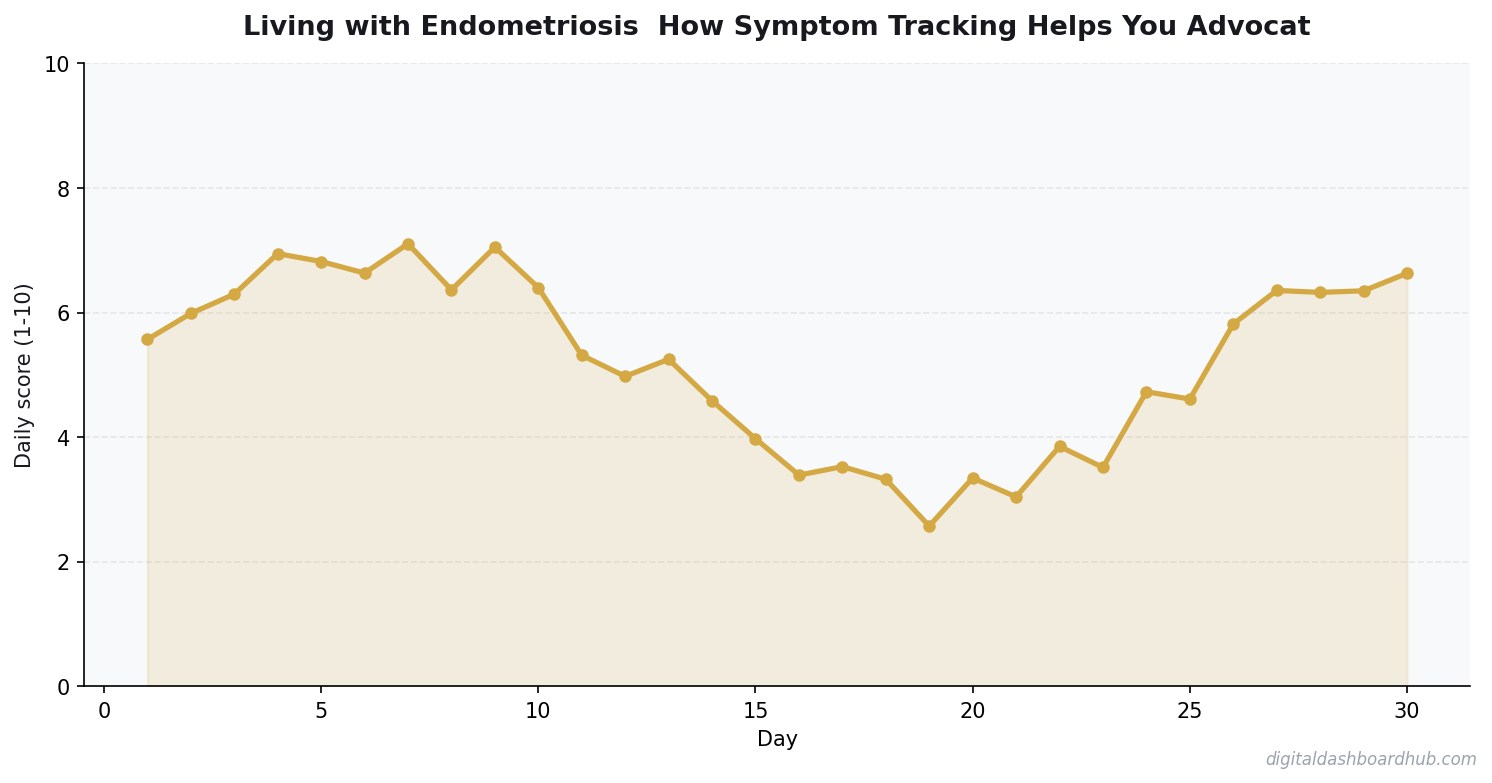
Pain Level and Location
Use a consistent scale (1-10) and note where you feel pain. Endo pain is often different from period cramps—it might be deep in the pelvis, one-sided, or affect your lower back or legs. Specificity matters. Instead of “bad pain,” write “7/10 sharp pain on right side, radiating to hip.”
Timing Within Your Cycle
Track what day of your cycle the pain occurs. Endo pain often correlates with menstruation but can happen throughout the cycle. Some people experience pain during ovulation or even mid-cycle. Your cycle data becomes evidence that this isn’t just “normal” period pain.
Duration and Pattern
How long does the pain last each day? All day? Only mornings? Does it peak at certain times? Patterns reveal whether this is cyclical inflammation or something constant.
Triggers and Relievers
What makes it worse? Certain foods? Bowel movements? Sexual intercourse? Exercise? What provides relief? Heat? Rest? Movement? Tracking triggers helps you manage symptoms AND gives doctors insight into severity.
Associated Symptoms
Endometriosis doesn’t just cause pain. Track fatigue, bloating, brain fog, digestive issues (constipation, diarrhea, painful bowel movements), heavy or clotted periods, or pain during or after sex. These “secondary” symptoms often point directly to endo.
Impact on Life
This is crucial: note how symptoms affect your ability to work, exercise, have relationships, or engage in normal activities. A doctor needs to understand the functional impact. “Unable to work,” “canceled plans,” “needed to leave meetings early”—this demonstrates why treatment matters.
Mood and Emotional Patterns
Chronic pain affects mental health. Track anxiety, depression, or mood changes alongside physical symptoms. This isn’t “it’s all in your head”—it’s the documented reality of living with a chronic condition.
The most effective tracking uses a combination method: a simple daily log (pain level, location, key symptoms), detailed notes when symptoms flare, and cycle awareness. You don’t need a complicated system. Consistency matters more than complexity.
How to Use Your Data at Doctor Appointments
Tracking data becomes most powerful when you bring it to appointments strategically.
Prepare before your visit: Review 3-6 months of data. Identify patterns. Write down the most important trends: “I have severe pain 5-7 days each cycle, consistently worse around ovulation and menstruation,” or “I’ve had to miss work 2-3 days monthly due to pain.”
Share the overview, not the details: Doctors don’t have time to read six months of daily notes. Summarize the big picture: pain pattern, severity range, frequency, impact on function. Bring the full data in case they want to see specific examples.
Use specific language: Instead of “my period hurts,” say “I experience 8-9/10 pain in my lower abdomen and right side for 5-7 days each cycle, radiating to my hip. Over-the-counter pain relief is ineffective. I’ve missed work and social activities due to severity.”
Request what you need: Tracking helps you ask for specific help: “I need a diagnostic laparoscopy to confirm endometriosis,” or “I need a treatment plan that addresses this level of pain,” or “I want to discuss surgery options based on this pattern.”
Document the conversation: After your appointment, note what your doctor said. Did they dismiss you? Offer testing? Prescribe something without investigating further? This becomes part of your own medical record and history. Some people maintain a “doctor response log” alongside symptoms—it reveals patterns of dismissal that inform future provider choices.
Building Your Support System: You’re Not Alone
The endometriosis community is simultaneously heartbreaking and beautiful. Thousands of people are living this exact experience—the diagnosis delay, the pain, the grief of what endo takes from you.
Online communities like Endometriosis Association or disease-specific subreddits connect you with people who genuinely understand. They can validate your experience, share treatment outcomes, and help you navigate medical decisions.
Patient advocacy organizations provide education about treatment options, help you find endo-informed specialists, and fight for better research and awareness.
Therapy or counseling can be invaluable. Living with chronic pain is genuinely traumatic. You may experience grief (loss of activities, fertility, normalcy), anxiety about the condition, or depression. These aren’t weakness—they’re normal responses to real challenges.
Connecting with others doing this tracking work normalizes the advocacy process. It’s not obsessive or neurotic to track your symptoms—it’s medically necessary self-advocacy.
Tracking Tools That Make It Easier
You might track manually with a journal or spreadsheet, or use a dedicated app. Some people use our Menstrual Cycle Tracker to monitor patterns across your entire cycle. For those managing the emotional weight of chronic illness, our Anxiety Management Spreadsheet helps you document the mental health side of endometriosis—because your emotional wellbeing matters too.
If you’re navigating the stress of diagnosis and advocacy, our Stress Management Spreadsheet can help you identify which situations compound your physical symptoms. And for processing the emotional toll of living with chronic illness, our CBT Worksheet Tracker provides structured frameworks for managing pain-related thought patterns.
The format matters less than consistency. Choose whatever you’ll actually use daily. Some people prefer paper. Some prefer apps. Some use spreadsheets they customize. The best tracking system is the one you’ll stick with.
The Bigger Picture: Advocacy and Validation
Ultimately, symptom tracking is an act of self-advocacy and self-validation.
You’re saying: “My pain is real and measurable.”
You’re saying: “My experience deserves medical investigation.”
You’re saying: “I will not accept dismissal.”
This matters enormously. Endometriosis disproportionately affects women and AFAB people—populations historically dismissed in medicine. By bringing data, you’re combating that bias. You’re proving your case in a system that hasn’t been designed to hear you.
Some doctors will still dismiss you. Some will offer inadequate treatment. But others—the good ones, the endo-informed ones—will see your tracking data and immediately understand you’re someone who takes their health seriously. They’ll respect that. They’ll engage differently.
Your symptom tracking isn’t just a medical tool. It’s a form of resistance against being gaslit. It’s evidence that you know your body. It’s the foundation for the care you deserve.
Preparing for Your Journey Ahead
Whether you’re awaiting diagnosis or navigating long-term management, tracking becomes your constant companion and your greatest advocate.
If you’re newly tracking, know that it often takes 2-3 months of consistent data before real patterns emerge. Be patient with yourself. You’re building evidence, not proving anything overnight.
If tracking feels overwhelming, start simple. Even tracking pain level and date is valuable. You can add details as you gain energy.
If you’re frustrated with your doctors, that frustration is valid. Not all doctors are endo-informed. Tracking helps you identify who is and who isn’t, guiding your next steps.
The endometriosis journey is long and difficult, but you don’t have to navigate it alone—and you don’t have to navigate it without tools.
Get Your Free Tracking Starter Guide
Taking those first steps toward better advocacy can feel overwhelming. That’s why we’ve created a free Endometriosis Symptom Tracking Starter Guide—designed specifically for the endo journey. It includes:
- A customizable tracking template
- Pain location diagrams
- Symptom correlation charts
- Questions to ask your doctor
- Resources for endo-informed care
More Tools for Your Wellness Journey
As you develop your tracking practice, consider how other aspects of health connect. Many people with endometriosis find that tracking stress, anxiety, and overall wellbeing alongside physical symptoms provides deeper insight. Our PCOS Management Bundle (many people have both endo and PCOS) and Depression Tracking Bundle can complement your symptom tracking for a more holistic view.
You deserve healthcare that listens. You deserve treatment that works. And you deserve support on this journey. Your tracked data—your voice, your patterns, your story—is the tool that makes that possible.
Disclaimer: This article is educational and should not replace professional medical advice. Endometriosis diagnosis and treatment should be managed by qualified healthcare providers. If you suspect you have endometriosis, consult with your doctor or seek a referral to an endo-informed specialist. The information provided is based on general knowledge about endometriosis and patient advocacy; individual experiences vary widely. Always prioritize your health and safety by working with medical professionals.
Keep reading (related guides):
- Free Menopause Symptom Tracker — Try It Now
- Free PCOS Symptom Tracker Dashboard — Try It Now
- PCOS Hormone Cycle Dashboard: Free Symptom Tracker That Sees the Full Picture
- Postpartum Recovery Tracking: What to Monitor in the First 12 Weeks (That Nobody Talks About)
- Rent vs. Buy Calculator 2026: The True Cost of Each Option (Real Numbers)
255+ interactive tools for your money, time, and health.
Full dashboard access · Stripe-secure checkout · Cancel anytime
Keep Reading
- I Tested 9 Expense Tracker Apps for 3 Months — Here’s What Actually Worked
- How to Regulate Your Nervous System: 8 Steps to Move From Chronic Stress to Calm
- I Tracked My Nervous System for 90 Days — Here’s What I Learned About My Stress, Sleep, and Sanity

Andy Gaber is the founder of Digital Dashboard Hub, a suite of 255+ interactive financial, productivity, and wellness tools. He built DDH after getting frustrated with financial apps that gave outputs without context. Follow along for tool tutorials, revenue analytics breakdowns, and honest takes on personal finance.