By the time you feel thirsty, you’re already mildly dehydrated. That’s not a scare tactic — it’s how human thirst physiology works. Your thirst mechanism lags behind your actual hydration status by about 1-2% body weight in fluid loss, which is precisely the range where research shows measurable declines in cognitive function, physical performance, and mood. Most people live in this zone every day without connecting it to how they feel.
Water intake tracking isn’t about obsessive measurement. It’s about building enough awareness to develop consistent habits — and catching the patterns that make you chronically under-hydrated on busy days.
How Much Water Do You Actually Need?
The “8 glasses a day” rule is not based on research. It originated from a 1945 US Food and Nutrition Board recommendation that was immediately followed by a note saying most of this water comes from food — a note everyone ignored for 75 years.
The evidence-based approach to hydration targets:
Why Most People Are Actually Underdinking
The standard “8 glasses a day” guideline is outdated and context-free. A 130 lb woman doing a desk job in a cool climate needs meaningfully less water than a 200 lb man doing physical labor in Arizona in July. The current consensus from the National Academies: 3.7 liters (125 oz) of total water per day for men, 2.7 liters (91 oz) for women — including water from food, which accounts for roughly 20% of intake for most people. So actual drinking targets: 100 oz for men, 73 oz for women, as a baseline before adjusting for activity and climate.
Most people hit 50-60% of their actual target without any attention to it. That chronic low-level dehydration is subtle — it doesn’t feel like “being thirsty.” It shows up as afternoon fatigue, mild headaches, difficulty concentrating, and skin that looks more dull than it should. The research on cognitive performance is clear: even mild dehydration (1-2% of body weight in fluid loss) measurably degrades reaction time, focus, and short-term memory.
What Your Urine Color Actually Tells You
This is the simplest real-time hydration metric available to anyone. Pale yellow (lemonade-colored) means you’re well-hydrated. Dark yellow to amber means you’re behind — drink something now. Clear means you may be over-hydrating (real, though less common than underdrinking). Aim for consistently pale yellow throughout the day.
Two exceptions: B-vitamins make urine bright yellow regardless of hydration, so if you take a B-complex supplement, urine color is less reliable as a signal. And first-morning urine is almost always darker from overnight concentration — that’s not a concern, just drink a glass of water before coffee.
How to Actually Drink More Water Without Thinking About It
Behavioral design beats willpower every time. The people who consistently hit their water targets don’t do it through discipline — they’ve made it the default:
- Keep a 32 oz water bottle visible on your desk. What’s in front of you gets consumed. What’s in the cabinet doesn’t.
- Link water drinking to existing habits: one glass before every meal (also helps with appetite regulation), one glass when you wake up, one glass before bed.
- If you hate plain water, sparkling water or adding citrus/cucumber changes the experience enough for most people to dramatically increase intake.
- Set a soft deadline: finish your first 32 oz before noon. This front-loads intake and makes the afternoon target feel smaller.
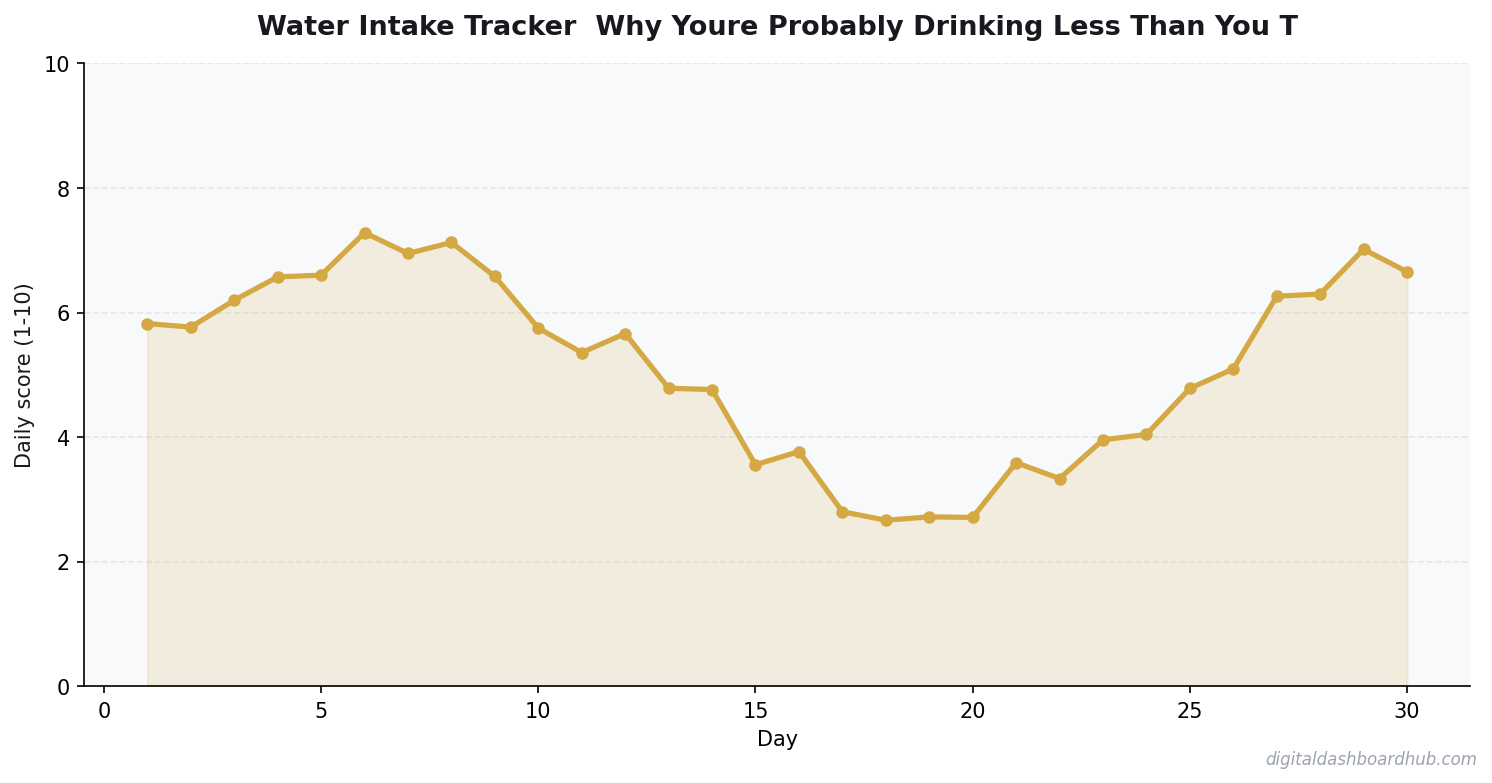
Track it for 2 weeks. You’ll learn where in your day the gaps are — and usually, fixing one timing gap fixes 60-70% of your total deficit.
When to Consult a Doctor About Water Intake
Chronic extreme thirst despite adequate drinking can signal blood sugar issues, kidney problems, or diabetes insipidus — all worth investigating. If you’re drinking above your target consistently and still feel thirsty, that’s a conversation for your doctor, not a signal to drink more. The tracker is a tool for optimization in normal ranges; it’s not a substitute for medical evaluation of concerning symptoms.
The Connection Between Hydration and Everything Else
Hydration affects cognitive function, physical performance, digestion, skin health, and kidney function — but the connections people least expect are the metabolic ones. Adequate hydration supports the body’s ability to metabolize stored fat. It helps kidneys process waste efficiently, reducing the load on the liver (which would otherwise step in for kidney function and has less capacity for fat metabolism as a result). And it physically affects appetite: a 2022 meta-analysis found that drinking water before meals reduced calorie intake by 13-22% in people trying to lose weight, simply because the stomach was partially full.
The fatigue connection is the most commonly missed. Mild dehydration of 1-2% body weight in fluid loss (a 150-lb person losing just 1.5-3 lbs in water) measurably reduces aerobic performance by 4-6% and cognitive performance significantly. Most people attribute mid-afternoon energy crashes to poor sleep, blood sugar swings, or general stress — but in many cases, the proximate cause is not having had enough water before 2pm.
A simple test: next time you feel the afternoon energy drop, drink 16 oz of water and wait 15 minutes before reaching for caffeine. If the energy improves, dehydration was a significant contributor. You now have a faster, cheaper, calorie-free solution to that recurring problem.
Hydration and Exercise: Getting the Numbers Right
Your hydration targets increase meaningfully with exercise. During physical activity, you lose 16-32 oz of water per hour through sweat depending on exercise intensity and ambient temperature. General guideline: drink 17-20 oz of water 2 hours before exercise, 8 oz 20-30 minutes before, and 8 oz every 20 minutes during exercise. Rehydrate post-workout with 16-24 oz per pound of body weight lost during the session (weigh yourself before and after if you want precision).
For most casual exercisers doing 45-60 minute sessions, drinking to thirst and monitoring urine color afterward is sufficient. For anyone doing high-intensity training in heat, outdoor endurance work, or sessions over 90 minutes, the above schedule matters — dehydration that builds gradually through a workout impairs both performance and recovery in ways that are hard to reverse mid-session once you’re behind.
Electrolytes matter most during extended sweat sessions. Plain water rehydrates, but sweat contains sodium, potassium, and magnesium. Replacing just the water after a heavy sweat session (particularly in heat) without replacing electrolytes can dilute blood sodium — a condition called hyponatremia that causes fatigue, headache, and in severe cases, more serious symptoms. For most people this is only relevant during or after 2+ hour high-intensity sessions or in extreme heat. If that describes your workouts, adding a low-sugar electrolyte supplement is worth it.
Hydration Myths Worth Clearing Up
Myth: coffee and tea don’t count toward daily water intake. Wrong. Caffeinated beverages do have a mild diuretic effect, but the net hydration from a cup of coffee or tea is still positive — the water content exceeds the amount expelled. A moderate coffee drinker (2-3 cups/day) counts those toward total fluid intake. What doesn’t count well: alcohol (genuinely dehydrating, not just mildly diuretic), and high-sodium processed foods (which increase the body’s water demand).
Myth: you need exactly 8 glasses. Body size, activity level, climate, and diet all affect actual needs. A sedentary 120-lb person in a cool climate needs meaningfully less than a 200-lb construction worker in Arizona summer. Use the target ranges, adjust for your context, and use urine color as your real-time feedback mechanism.
Myth: drinking more water is always better. Hyponatremia — overhydration-induced sodium dilution — is a real condition seen primarily in endurance athletes who drink excessive plain water without electrolytes. It’s rare in everyday hydration scenarios, but the point stands: more isn’t always better. The goal is adequate, not maximum.
Keep reading (related guides):
- Free Sinking Fund Calculator — Try It Now
- Free Menopause Symptom Tracker — Try It Now
- Nervous System Regulation Tracker: The Visual Dashboard That Helps You Understand Your Bodys Stress Signals
- I Owed $47,000 in Taxes and Had $11,000 in the Bank: How I Rebuilt My Freelance Finances From the Ground Up
- Sinking Fund Savings Goal Planner: The Free Visual Dashboard That Kills Surprise Expenses
255+ interactive tools for your money, time, and health.
14 days free · No charge today · 2-click cancel
Keep Reading
- I Tested 9 Expense Tracker Apps for 3 Months — Here’s What Actually Worked
- How to Regulate Your Nervous System: 8 Steps to Move From Chronic Stress to Calm
- I Tracked My Nervous System for 90 Days — Here’s What I Learned About My Stress, Sleep, and Sanity

Andy Gaber is the founder of Digital Dashboard Hub, a suite of 255+ interactive financial, productivity, and wellness tools. He built DDH after getting frustrated with financial apps that gave outputs without context. Follow along for tool tutorials, revenue analytics breakdowns, and honest takes on personal finance.