A Four-Year Degree Costs $120K. A Trade Apprenticeship Pays You While You Learn.
Enter your own numbers in the interactive tool below and get a real-time read. The dashboard version adds saved scenarios, history, and full feature access.
Somewhere around 2020, the narrative shifted. People stopped pretending that a communications degree from a mid-tier university was a guaranteed path to the middle class. Meanwhile, the plumber who started at 19 is pulling $95K at 27 with zero student debt and a pension. The math has never been more clear.
But “trades pay well” is vague. Which trades? Where? At what experience level? Let’s get specific with 2026 salary data.
Top Trade Salaries in 2026 (National Averages)
The asterisk on those “master/senior” numbers: many tradespeople at that level have started their own shops. A master plumber running a crew of 4 can gross $250K-$400K annually. That’s business owner income, not employee income.
Regional Pay Differences Are Massive
Same trade, same experience, wildly different pay:
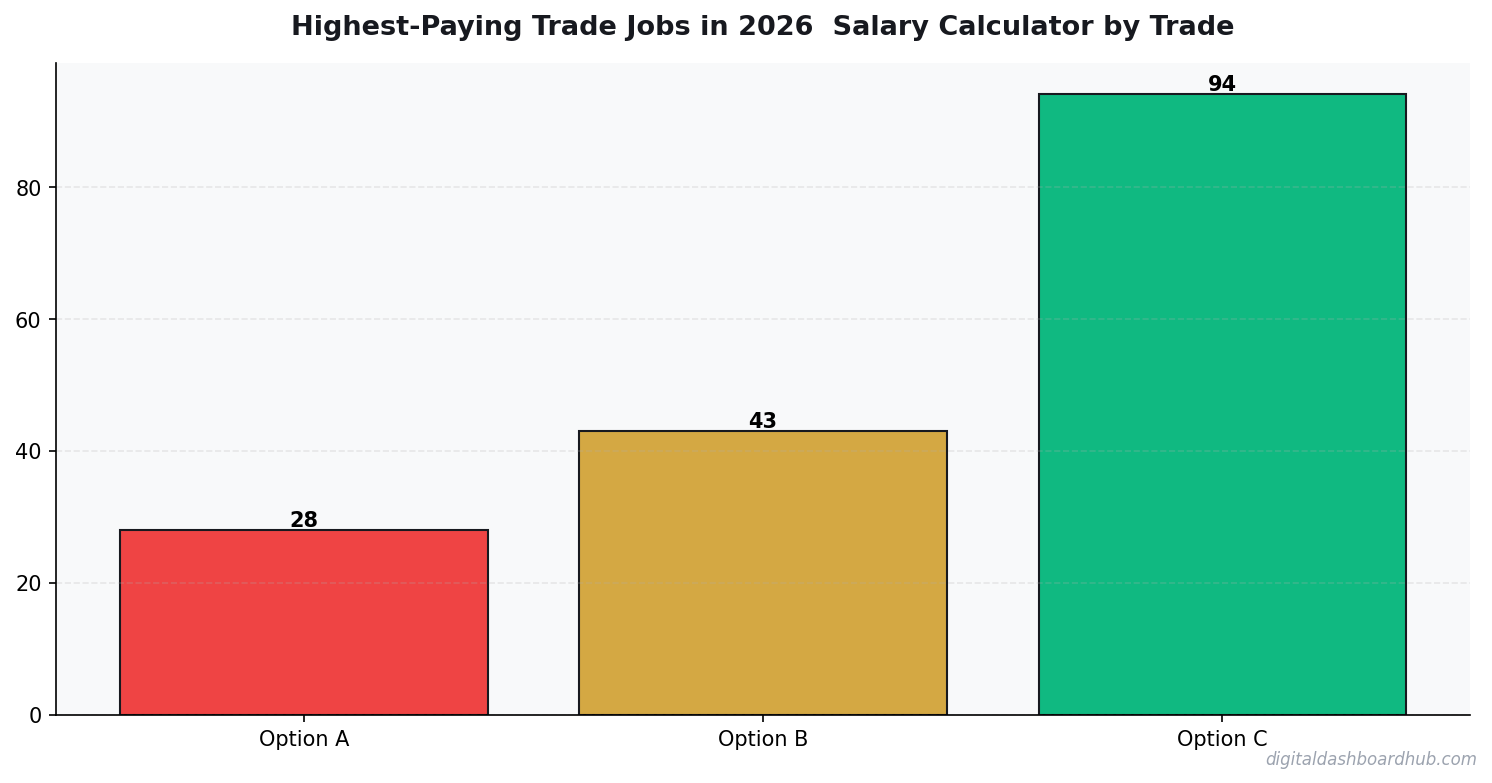
Before you pack for San Francisco: adjust for cost of living. A plumber making $58K in Indianapolis has roughly the same purchasing power as one making $77K in Portland. The Midwest is the sweet spot for trade workers — solid pay, low cost of living, and desperate demand.
Trade School vs. College: The 10-Year ROI
This is the comparison nobody in high school guidance offices is making:
The trade path has a 4-6 year head start on wealth building. By the time a college graduate pays off their loans and starts saving seriously, a tradesperson already has a house, a retirement fund, and no debt.
Curious how trade income stacks up for your specific situation? Try our salary comparison calculators — plug in your trade, region, and experience level to see projected earnings, taxes, and take-home pay over 10 years.
The Trades Nobody Talks About
Everyone knows about electricians and plumbers. These less-discussed trades are quietly paying six figures:
- Elevator mechanics: Median $102K. One of the highest-paid trades, but programs are extremely competitive. IUEC union jobs are golden.
- Boilermakers: $75K-$110K. Seasonal shutdowns mean overtime pays can push annual earnings to $130K+.
- Power plant operators: $85K-$105K. Requires certifications but no degree. Many utilities offer paid training.
- Dental lab technicians: $50K-$80K. Not traditional “trades” but same model — learn a technical skill, skip college.
- Wind turbine technicians: $58K-$85K. Fastest-growing trade job in the country. If you don’t mind heights, the demand is insane.
How to Get Started
The path into trades has three main entry points:
- Union apprenticeship: Apply through your local union hall. Competitive but best overall deal — paid training, guaranteed wage progression, benefits from day one.
- Non-union apprenticeship: Apply directly to contractors. Easier to get into, lower starting pay, faster advancement potential.
- Trade school: 6-18 month programs. Good for getting your foot in the door, but you’re paying tuition instead of earning. Best for trades that require pre-certification (HVAC, welding).
Start With This
- Pick 2-3 trades that interest you. Visit a job site or shop if possible. The daily reality matters more than the salary number.
- Search your local union halls. Google “[trade] union apprenticeship [your city].” Most accept applications during specific windows — find out when the next one opens.
- Run the numbers. Use our trade salary calculator to compare 10-year earnings across trades and regions. Factor in overtime, union premiums, and the cost of NOT having student loans.
Digital Dashboard Hub has over 160 business and career calculators built for people making real financial decisions. Start your free trial and compare your options with real data.
The Real Numbers: What Top Trade Earners Actually Make
The Bureau of Labor Statistics median numbers get thrown around a lot, but they include apprentices and part-timers. Here’s what experienced tradespeople actually earn in 2026:
Journeyman electrician (5-10 years, union, high-cost metro): $85,000–$105,000 base + benefits worth another $15,000–$25,000. Some overtime can push total comp above $130,000.
Plumber (licensed, non-union, running service calls): $70,000–$95,000. Own a plumbing business and bill $180/hour? You’re looking at $150,000–$250,000 in revenue, with net income depending heavily on whether you have employees.
HVAC technician (EPA certified, commercial service): $65,000–$90,000 with strong overtime in summer and winter. Top performers doing commercial maintenance contracts hit six figures reliably.
Elevator mechanic: The most underrated trade. Union locals in major cities average $115,000–$145,000 including benefits. It’s physically demanding and requires specialized training, but the income ceiling is exceptional.
The Factors That Actually Move Trade Income
Geography is the biggest single variable — a licensed plumber in San Francisco earns roughly 60% more than the same license in rural Alabama. The labor shortage has compressed this gap but hasn’t eliminated it. High cost-of-living metros still pay significantly more.
Union vs non-union matters differently than most people think. Union trades offer predictable wage scales, defined benefits, and pension access — and the total compensation math often favors union over higher non-union hourly rates once you price out private health insurance and retirement. Non-union can offer higher hourly rates but less stability and no benefits floor.
The real ceiling-breaker is owning the business. A journeyman electrician at $95K hits a soft ceiling. An electrician who starts their own shop and scales to 3 crews is running a $500K–$1M revenue business with 20–30% net margins. The trade is the credential — the business is the wealth builder.
What the Trades Shortage Actually Means for Your Income
The United States is short roughly 500,000 skilled trade workers, and that gap is projected to worsen for at least the next decade. For working tradespeople, this is not a problem — it’s leverage. Electricians, plumbers, and HVAC techs who are good at their jobs are turning down work in most markets. That supply constraint is what’s driving wages up faster than almost any other sector.
The practical implication: if you’re early in a trade career, you’re entering one of the strongest labor markets in a generation. And if you’re considering starting a trade business, the competitive environment is unusually favorable — there’s more work than there are people to do it in most cities. The window won’t last forever, but it’s open now.
One more thing worth knowing: the skilled trades are increasingly welcoming of career changers. Someone who spent 10 years in marketing or finance and retrained as an electrician in their 30s isn’t unusual anymore. The 3-4 year apprenticeship model is designed to be completed while working, and the payoff — stable income, physical work, high demand, eventual business ownership — is genuinely compelling compared to corporate career ceilings that many people hit anyway.
Keep reading (related guides):
- Auto Mechanic Revenue: What Owners Make vs. What Youd Expect (2026)
- Boutique Revenue Calculator
- Wedding Vendor Cost Calculator: What Every Vendor Actually Charges
- Best Beauty Business to Start in 2026: Revenue Calculator by Niche
- Rent vs. Buy Calculator 2026: The True Cost of Each Option (Real Numbers)
255+ interactive tools for your money, time, and health.
Full features for 14 days · Secure payment · Stop anytime
Keep Reading
- The Side Hustle Tax Trap: Track Every Dollar
- Freelancer Finance Dashboard: Track Income, Taxes, and Cash Flow
- Side Hustle Income Tax Tracker (Free Tool)
Common Questions About Highest-Paying Trade Jobs in 2026: Salary Calculator by Trade
How long does it take to see results?
Most people see meaningful progress within 30-90 days when they apply these strategies consistently. The key is tracking your numbers from day one so you have a baseline to measure against.
What’s the biggest mistake people make?
Trying to do everything at once. Pick one or two strategies from this guide, implement them fully, then layer in additional tactics. Spreading yourself thin is the fastest way to see no results from any of it.
Do I need special tools or software?
Not necessarily to start — but the right tools eliminate hours of manual work. Our free calculators and trackers at Digital Dashboard Hub are a good starting point before you invest in paid software.

Andy Gaber is the founder of Digital Dashboard Hub, a suite of 255+ interactive financial, productivity, and wellness tools. He built DDH after getting frustrated with financial apps that gave outputs without context. Follow along for tool tutorials, revenue analytics breakdowns, and honest takes on personal finance.