You sit in the doctor’s office and they ask “how have your symptoms been?” and you blank.
Your doctor is waiting for an answer. You give them a vague “it’s been rough” and they prescribe something else to try. Nobody really knows if it’s working because you don’t have data—you just have a feeling.
This is the PCOS reality for most women. We live in our bodies every single day, experiencing every symptom firsthand, yet we go into medical appointments empty-handed because tracking our own patterns feels impossible. It’s like being asked to describe the weather for the last 90 days without ever checking a thermometer.
I spent five years managing my PCOS this way—guessing, feeling, hoping something would stick. Then I built a tracking system that actually works with how my cycle operates. Within three months, I had clear patterns. Within six months, my doctor and I could actually see what treatments were working. Within a year, I’d made more progress on my PCOS management than I had in the previous five years combined.
I want to show you exactly what changed, and how to finally speak your doctor’s language: data.
PCOS symptoms are unpredictable, overlapping, and easy to underreport at doctor appointments. This symptom tracker captures your cycle patterns, hormone shifts, and daily symptoms in one place — so you can finally show your doctor what’s actually happening.
What Should You Track When You Have PCOS?
The fundamental problem with regular period tracking apps is that they were designed for people with predictable cycles. They assume: ovulation happens day 14, your period lasts 5 days, everything repeats every 28 days.
PCOS laughs at those assumptions.
Your cycle might be 32 days, then 50 days, then 24 days. You might spot randomly between periods. You might have a “period” that lasts 2 days, or 10 days. Ovulation might happen unpredictably or not at all. Most apps would mark 60% of that as “errors” or “anomalies.”
For PCOS tracking, there are no anomalies. There’s just your actual pattern, which is different from the textbook version—and that difference is exactly what matters.
The second problem: standard trackers only track one variable. You log your period and maybe some symptoms. But PCOS isn’t a one-variable problem. It’s the intersection of hormonal, metabolic, and inflammatory factors. You need to track period timing, yes—but also sleep quality, energy levels, skin clarity, hair growth, mood, appetite, energy crashes, and ovulation signs.
When you only track your period, you miss 90% of the information your doctor actually needs.
The Missing Piece: Connecting Symptoms to Hormone Patterns
Here’s what my regular period app missed: I’d note “fatigue” on Tuesday, then forget about it. I’d wake up with a cystic acne breakout on Friday and just treat the symptom. I’d have a random anxiety spike on a Wednesday and chalk it up to stress.
I didn’t see the pattern because I wasn’t looking across time. All those individual symptoms were data points—but until I connected them, they were just noise.
The breakthrough came when I started tracking not just when I had symptoms, but the full context: where I was in my cycle, what I’d eaten, my sleep quality, stress level, and which medications I was taking. Suddenly, the chaos had structure.
I realized: my worst fatigue always happened 3-5 days after my period started, which meant anemia was a factor. My acne flared up consistently in the luteal phase, which meant my skin was reacting to progesterone levels. My anxiety spikes correlated with irregular sleep, which meant my insulin sensitivity was affecting my nervous system.
Each connection was data my doctor could actually use. Instead of saying “I’m tired,” I could say “my fatigue peaks in the follicular phase and improves when I add iron supplementation.” That’s a conversation that leads somewhere.
Comparison: Tracking Approaches for Hormone-Related Conditions
| Feature | Generic Period App | Fertility App | PCOS-Specific Tracker |
|---|---|---|---|
| Handles irregular cycles | No (assumes 28-day cycle) | Limited (designed for ovulation prediction) | Yes (flexible cycle length) |
| PCOS-specific symptoms | None | None | All major symptoms included |
| Data export for doctors | Screenshots only | Some export options | Clean PDF reports by symptom |
| Hormone-related insights | Basic | Ovulation-focused | Cycle-phase analysis |
| Sleep/energy/mood tracking | Limited | Limited | Integrated per cycle phase |
| Medication tracking | No | No | Yes (cross-reference to symptoms) |
| Doctor integration | No | No | Shareable reports |
The difference isn’t just features—it’s fundamental design. Generic trackers assume PCOS is an outlier. PCOS-specific trackers assume PCOS is the patient’s primary condition, so everything is built around the actual patterns and needs.
How the DDH PCOS Tracker Handles This
The DDH PCOS Symptom Tracker starts with a simple principle: you know your body better than any app algorithm. The tracker’s job isn’t to predict your cycle. It’s to help you organize what you’re actually experiencing.
Here’s what makes it different:
1. Flexible cycle tracking. You define what a “cycle” means to you. Is it the first day of bleeding? A hormonal symptom? Irregular periods? The tracker adapts. You’re not forcing your body into someone else’s framework—you’re working with your actual pattern.
2. Symptom architecture built for PCOS specifically.** The tracker includes the symptoms PCOS patients actually report: irregular periods, heavy bleeding, mid-cycle spotting, energy crashes, cystic acne, hair growth (hirsutism), appetite changes, mood shifts, sleep quality drops, and insulin resistance markers like unusual thirst or weight changes despite diet.
Most of these don’t appear in generic trackers because they’re not “period symptoms”—they’re PCOS manifestations that happen around the cycle.
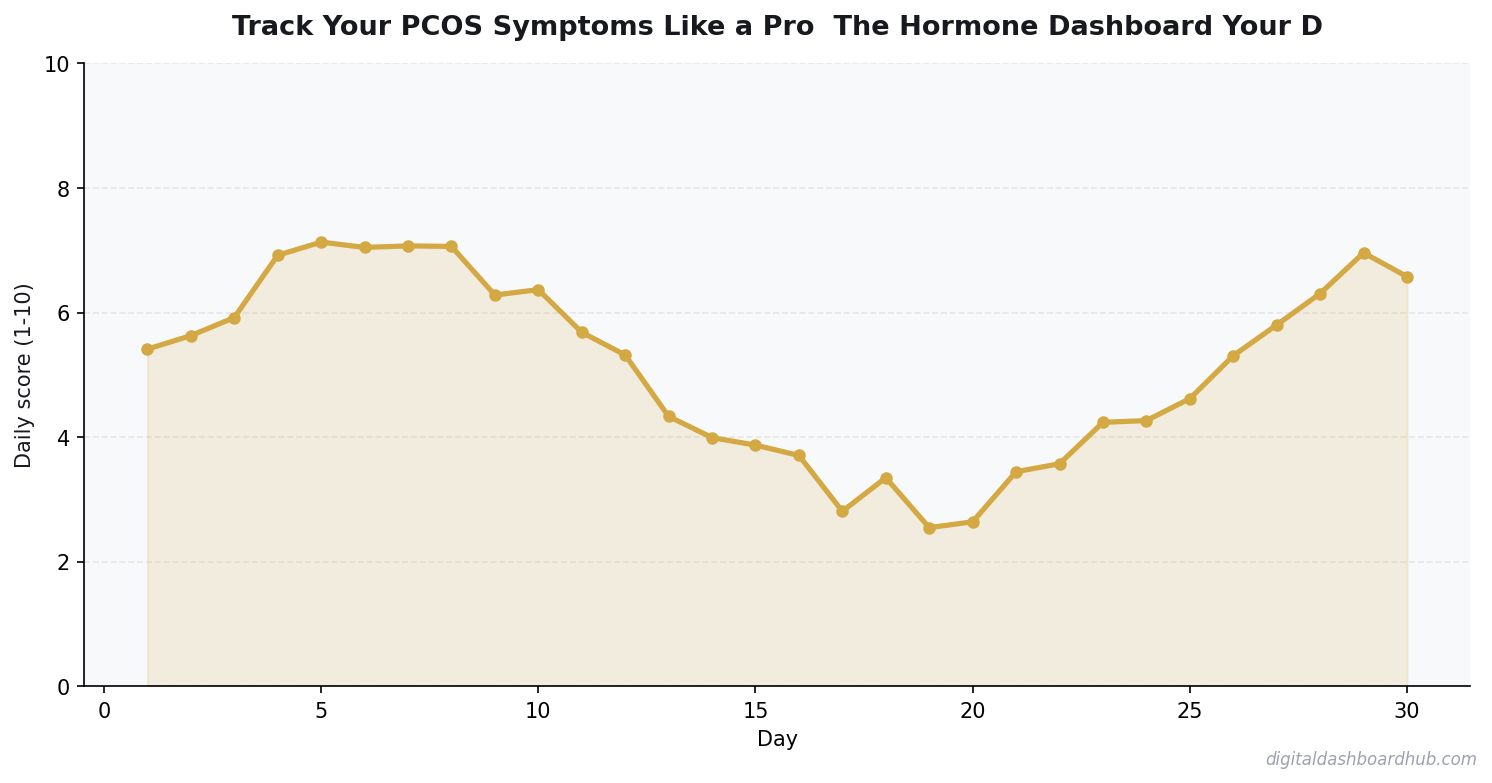
3. Phase-based insights. Instead of just plotting a calendar, the tracker organizes your data by cycle phase: menstrual, follicular, ovulatory, and luteal. This matters because PCOS symptoms often cluster differently by phase. Your fatigue might be worst in the follicular phase (pointing to iron or thyroid factors), while acne flares in the luteal phase (pointing to progesterone sensitivity).
When your doctor asks “how’s the Spironolactone working,” you can say “my acne improved in the follicular phase and stayed stable in the luteal, but I saw no change in hirsutism”—that’s actionable data.
4. Medication and treatment tracking.** You can log which medications you’re taking when, then cross-reference improvements or side effects. Started a new metformin dose? The tracker will show you if your energy levels shifted two weeks later, if your cycle regulated, if your appetite changed. This is gold for refining treatment plans.
5. Doctor-ready exports. The tracker generates clean, organized PDF reports that show your symptom patterns over time, separated by phase. You walk into your appointment with actual data instead of trying to remember.
Real Patterns I Discovered (And Why They Matter)
When I started actually tracking my PCOS, the patterns were humbling. I thought I understood my cycle, but I was operating on guesses.
Pattern 1: My “irregular” cycle was actually semi-regular—just not a 28-day cycle. I was cycling every 32-36 days consistently, but I’d always described it as “random.” Once I saw the 34-day average, I could actually prepare for my period instead of being blindsided.
Pattern 2: My worst energy crashes happened 5-8 days post-period start. I was attributing it to depression or stress, but the pattern was too consistent. It pointed to iron deficiency. I started supplementing and energy improved dramatically. My doctor and I never would have connected those dots without the data.
Pattern 3: My skin was responding to cycle phase, not random breakouts. Cystic acne in the luteal phase suggested my skin was reacting to progesterone. The tracker documented this pattern clearly enough that my dermatologist and I could try targeted luteal-phase skincare instead of treating every breakout identically.
Pattern 4: Sleep quality and insulin resistance were linked. When I slept poorly for 2-3 days, my next blood sugar readings came back higher and my craving for carbs became intense. The tracker showed this correlation month after month. This led to a conversation with my doctor about whether my insulin sensitivity was disrupting my sleep, not the other way around.
All of these discoveries required one thing: seeing the full picture over time. You can’t see patterns from a single month. You need 3-6 months minimum, and the tracker needs to organize it in a way that patterns actually emerge.
Building a PCOS Partnership With Your Doctor
Here’s what changes when you bring data to your appointments:
Before: “My PCOS is hard to manage.” After: “My luteal-phase fatigue improved 60% after I started iron supplementation, but I’m still seeing cystic acne flares that don’t respond to topical treatments.”
Before: “I don’t know if this medication is working.” After: “I’ve been on Spironolactone for 4 months. My hirsutism has improved slightly, but I’m seeing increased appetite in the luteal phase and wondering if there’s an alternative.”
Before: “My cycle is irregular.” After: “My cycle averages 34 days with spotting typically on day 19-21. My heaviest bleeding is days 1-3.”
Do you see the difference? One version is a patient with a problem. The other is a patient with data describing the problem. Your doctor can actually work with the second one.
The Most Important Metric You’re Probably Not Tracking
Here’s what I wish I’d tracked from day one: quality of life scores.
At the beginning and end of each cycle, I now rate my overall wellbeing on a 1-10 scale, along with quick notes: “10: felt normal energy all month” or “5: three days where I couldn’t function.” These scores, tracked over time, are your ultimate PCOS metric.
Ovulation timing matters. Symptom frequency matters. But what really matters is whether you’re living a full life or just surviving. When you track quality-of-life alongside medical markers, you start optimizing for the things that actually make PCOS manageable, not just the numbers on a hormone test.
I noticed my quality-of-life scores improved 40% once I started addressing the iron deficiency my tracker helped identify. That’s worth more than any single lab value.
Ready to Actually Understand Your PCOS?
The hardest part of PCOS management isn’t the condition itself—it’s the invisible-ness of it. You can’t see your insulin resistance. You can’t photograph your irregular hormones. Your symptoms feel random because you’re not organizing them in a way that reveals the actual pattern.
Once you start tracking, everything changes. Not because the PCOS goes away, but because you finally have a conversation partner—whether that’s your doctor, an endocrinologist, a dermatologist, or just yourself at 2am when you’re worried about your cycle.
Track your patterns. Bring the data. Change the conversation.
Get the “PCOS Symptom Tracking Checklist”—everything you should log for your next doctor appointment. Plus the exact questions to ask your doctor when you have data to back them up.
Start Tracking Your Patterns Today
The DDH PCOS Symptom Tracker is free, completely private, and designed to work with your actual cycle—not the textbook version. Log your symptoms, track your patterns, and when you’re ready to talk to your doctor, export a clean report.
Most users report that three months of tracking gives them the clearest picture they’ve ever had of their PCOS. By six months, they’re making informed decisions about their treatment instead of just hoping something works.
Your PCOS is unique to you. Your tracker should be too.
See Your PCOS Patterns. Own Your Health.
A hormone dashboard built by someone who understands PCOS from the inside.
Related Reading
- PCOS Symptom Tracking: A Complete Guide
- The Complete Guide to Fertility Tracking: Charts, Symptoms & What Your Cycle Is Telling You
- Period Tracking 101: Understanding Your Menstrual Cycle
Keep reading: The complete guide to tracking PCOS symptoms | Explore the PCOS tracker tool
Related resources from Digital Dashboard Hub:
- Migraine Frequency Tracker: Log Attacks, Triggers, and Medications That Work
- Nervous System Regulation Toolkit: Track Your Stress Response and Calm Down Faster
- Burnout Recovery Dashboard: Track Your Way Back From Running on Empty
Keep reading (related guides):
- Free Sinking Fund Calculator — Try It Now
- Free Menopause Symptom Tracker — Try It Now
- Nervous System Regulation Tracker: The Visual Dashboard That Helps You Understand Your Bodys Stress Signals
- I Owed $47,000 in Taxes and Had $11,000 in the Bank: How I Rebuilt My Freelance Finances From the Ground Up
- Free PCOS Symptom Tracker Dashboard — Try It Now
255+ interactive tools for your money, time, and health.
14 days free · No charge today · 2-click cancel

Andy Gaber is the founder of Digital Dashboard Hub, a suite of 255+ interactive financial, productivity, and wellness tools. He built DDH after getting frustrated with financial apps that gave outputs without context. Follow along for tool tutorials, revenue analytics breakdowns, and honest takes on personal finance.