If you’re reading this, there’s a good chance you’re somewhere on the trying-to-conceive journey. Maybe you just started and you’re overwhelmed by how much there is to learn. Maybe you’ve been at it for a few months and you’re starting to wonder if you’re doing it right. Or maybe you’ve been trying for a while and you’re looking for anything — any data point, any pattern, any clue — that gives you a better understanding of what’s happening in your body.
Wherever you are, I want you to know something: tracking your fertility is one of the most empowering things you can do during this process. Not because it guarantees results. But because it takes you out of the guessing game and puts real information in your hands. And when so much of the TTC journey feels out of your control, having data you can see and understand makes a real difference.
This guide is going to walk you through everything you need to know about fertility tracking — from the science of your cycle to the practical tools that make it manageable. No medical jargon without explanation. No false promises. Just clear, actionable information you can start using today.
Fertility / TTC Cycle Tracker
Track your cycle days, BBT, symptoms & fertile window with this interactive digital dashboard
Get the Fertility Tracker →
Understanding Your Cycle: The Foundation of Fertility Tracking
I built Digital Dashboard Hub after spending years looking for tools that actually worked without a spreadsheet degree. Here’s what I’ve learned:
Before we talk about tracking methods, let’s make sure we’re on the same page about what’s actually happening in your body each month. Your menstrual cycle isn’t one event — it’s a series of phases, and each phase gives you different signals about your fertility.
The Four Phases of Your Cycle
Menstrual Phase (Days 1-5 approx.): Day 1 of your period is Day 1 of your cycle. This is when your uterine lining sheds because pregnancy didn’t occur in the previous cycle. While it might feel like nothing productive is happening, your body is already beginning to recruit new follicles (the tiny sacs that contain your eggs) for this cycle.
Follicular Phase (Days 1-13 approx.): Overlapping with your period, this phase is when follicle-stimulating hormone (FSH) kicks in and several follicles begin developing. Usually one becomes the “dominant” follicle — the one that will release a mature egg. During this phase, estrogen rises steadily, and your cervical mucus begins to change.
Ovulation (Day 14 approx.): A surge of luteinizing hormone (LH) triggers the release of the mature egg from the dominant follicle. The egg travels into the fallopian tube and is viable for 12-24 hours. This is your peak fertility moment — but your fertile window actually starts several days before this, because sperm can survive in the reproductive tract for up to five days.
Luteal Phase (Days 15-28 approx.): After ovulation, the empty follicle transforms into the corpus luteum, which produces progesterone. This hormone thickens your uterine lining in preparation for a potential pregnancy. If the egg isn’t fertilized, progesterone drops, and your period begins — starting the cycle over.
The key insight: Your fertile window is approximately six days long — the five days before ovulation plus the day of ovulation itself. The goal of fertility tracking is to identify this window as accurately as possible.
The Three Pillars of Fertility Tracking
The most effective fertility tracking uses multiple data points, not just one. Think of it like triangulation — each method on its own gives you a clue, but when you combine them, you get a clear, reliable picture.
Pillar 1: Basal Body Temperature (BBT)
Your basal body temperature is your body’s lowest resting temperature, taken first thing in the morning before you get out of bed, talk, or even sit up.
How to track it:
Take your temperature at the same time every morning, before any activity. Use a BBT-specific thermometer that measures to two decimal places. Log it immediately.
What to look for:
A sustained rise of at least 0.2°F that lasts for three or more days confirms ovulation occurred.
The limitation:
BBT confirms ovulation after it happens. It doesn’t predict it in advance. That’s why you need it in combination with other methods.
Pillar 2: Cervical Mucus Monitoring
Your cervical mucus changes dramatically throughout your cycle in response to estrogen levels.
The progression: After your period: dry. Approaching ovulation: sticky, then creamy, then wet and slippery. At peak fertility: clear, stretchy egg white cervical mucus (EWCM). After ovulation: thick, sticky, or dry again.
Why it matters:
EWCM actively helps sperm survive and travel. When you see it, your body is signaling peak fertility.
Pillar 3: Ovulation Predictor Kits (OPKs)
OPKs detect the LH surge 24-36 hours before ovulation, giving you advance notice.
How to use: Start testing a few days before expected ovulation. Test in the afternoon or evening. A positive result means ovulation is likely within 24-36 hours.
Putting It All Together
Cervical mucus tells you fertility is approaching. OPKs tell you it’s imminent. BBT confirms it happened. Combined, you get a high-confidence picture of your fertile window.
The Right Tools Make All the Difference
| Tracking Method | Setup | Data Quality | Doctor-Shareable? | Best For |
|---|---|---|---|---|
| Paper journal | Immediate | Inconsistent | Sometimes | Low-tech preference |
| Generic health app | 5 min | Medium | Export only | Basic logging |
| DDH Symptom Tracker | 5 min | High (structured fields) | Yes — generates patterns | Chronic conditions, complex symptom tracking |
The Fertility TTC Tracker lets you log BBT, cervical mucus, OPK results, and symptoms in one dashboard with automatic cycle pattern calculations.
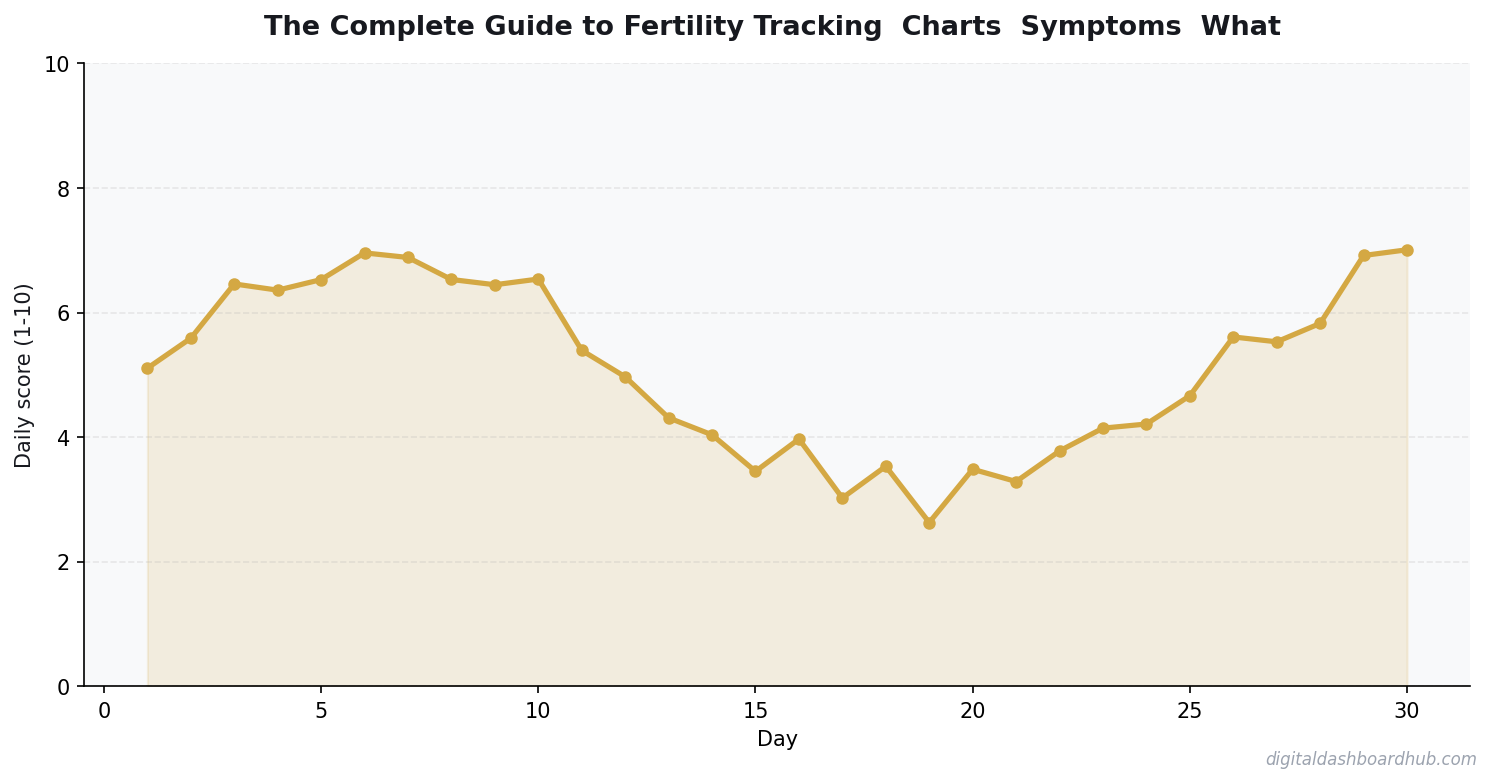
The Fertility TTC Spreadsheet provides structured charting in Google Sheets with auto-calculating cycle length and visual BBT charts.
The Fertility TTC Bundle combines both tools into one package.
Your Next Step
Start today with one data point. The Fertility TTC Tracker makes this simple, even for first-time charters.
When the Data Doesn’t Match the Textbook: What Your Cycle Is Actually Telling You
Most fertility tracking resources present the textbook cycle: 28 days, ovulation on day 14, luteal phase of exactly 14 days. That cycle exists for some people. For many, it doesn’t, and the mismatch between their data and the textbook creates unnecessary confusion and missed predictions.
Cycle length varies normally from 21 to 35 days. What matters is your cycle’s internal consistency, not whether it matches 28 days. A person who consistently cycles every 32 days has a regular cycle — it just doesn’t match the textbook. Tracking reveals your personal pattern, which is the only pattern that matters for your predictions.
The Symptoms That Actually Predict Ovulation (and the Ones That Don’t)
The most reliable ovulation indicators in order of reliability: basal body temperature shift (a clear 0.2°C rise post-ovulation), cervical mucus becoming clear and stretchy (the “egg white” consistency), LH surge on an OPK test strip. These three together give a very accurate ovulation window.
The symptoms that people track but that are poor predictors: mid-cycle cramps (Mittelschmerz) occur in only 20–25% of cycles and can be off by 1–3 days from actual ovulation. Breast tenderness is a post-ovulation symptom more often than a pre-ovulation one — tracking it won’t predict ovulation but may confirm it happened. More tracking isn’t better tracking. Tracking the right signals is.
Red Flags in Your Cycle Data Worth Discussing with a Doctor
After 3+ months of tracking, these patterns warrant a conversation with a healthcare provider: cycles shorter than 21 days or longer than 36 days consistently; a luteal phase shorter than 10 days (may indicate progesterone insufficiency); cycles that vary by more than 7–8 days month to month (suggests anovulatory cycles); absence of the BBT temperature shift that should occur after ovulation. None of these require alarm — but they’re information, and information is what tracking is for.
Keep reading (related guides):
- Free Menopause Symptom Tracker — Try It Now
- Free PCOS Symptom Tracker Dashboard — Try It Now
- IVF Cycle Tracking: How to Stay Organized Through the Most Overwhelming Process of Your Life
- Postpartum Recovery Tracking: What to Monitor in the First 12 Weeks (That Nobody Talks About)
- Bakery Revenue Calculator
255+ interactive tools for your money, time, and health.
Instant signup · Stripe-secure · Cancel in one click
This article is for informational purposes only and does not constitute medical advice. If you have concerns about your fertility, please consult with a qualified healthcare provider.
Disclaimer: This article is for informational purposes only and does not constitute professional advice. Always consult with a qualified professional for your specific situation.
Keep Reading
- I Tested 9 Expense Tracker Apps for 3 Months — Here’s What Actually Worked
- How to Regulate Your Nervous System: 8 Steps to Move From Chronic Stress to Calm
- I Tracked My Nervous System for 90 Days — Here’s What I Learned About My Stress, Sleep, and Sanity

Andy Gaber is the founder of Digital Dashboard Hub, a suite of 255+ interactive financial, productivity, and wellness tools. He built DDH after getting frustrated with financial apps that gave outputs without context. Follow along for tool tutorials, revenue analytics breakdowns, and honest takes on personal finance.