You might also find this helpful: How to Track Breastfeeding Symptoms (Free Tool + What to Log).
What IVF Tracking Actually Needs to Cover
The medical protocol is only part of what you’re managing during an IVF cycle. There’s the medication schedule — injections at specific times, trigger shots timed to the minute. There’s the monitoring appointment cadence — follicle scans every 1-3 days during stimulation, each one with numbers you need to remember and questions you need to ask. There’s the financial tracking — each cycle costs $12,000-$25,000 out of pocket in many markets, and insurance coverage, if any, often has complex rules about what qualifies. And then there’s the emotional reality of going through all of that, which most tracking systems don’t acknowledge at all.
The couples who navigate IVF best are the ones who externalize the tracking completely. When everything lives in your head, the cognitive load alone is exhausting — and the emotional stakes mean any missed detail feels catastrophic. When everything is logged in a system, you can simply check the system, not try to remember everything at once.
What to Track at Each Stage
Stimulation phase (days 1-12 approximately): Daily injection times and medication names/doses (this matters if you have a protocol adjustment mid-cycle), follicle counts and sizes at each monitoring scan, estradiol levels if your clinic shares them, and physical symptoms — bloating, discomfort — which are relevant for OHSS risk assessment.
Retrieval and fertilization: Number of eggs retrieved, number mature, fertilization report, and day-3 or day-5 embryo counts and grades. These numbers tell a story about egg quality and fertilization efficiency that matters for future cycles if this one doesn’t result in transfer.
Transfer phase: Lining measurement and pattern at transfer readiness check, embryo grade of transferred embryo(s), transfer date, and progesterone support protocol. The 10-14 days between transfer and beta test deserve their own symptom log — not to obsess, but because some symptoms (or their absence) can be clinically relevant if you need to discuss the outcome with your RE.
Managing the Emotional Reality
IVF cycles involve a level of hope and fear that most life experiences don’t come close to. Tracking supports that emotionally because it gives you something concrete and productive to do during a process where you have very little control. You can’t make more eggs respond to stimulation. You can track what happened at each scan so you’re prepared for the next conversation with your team.
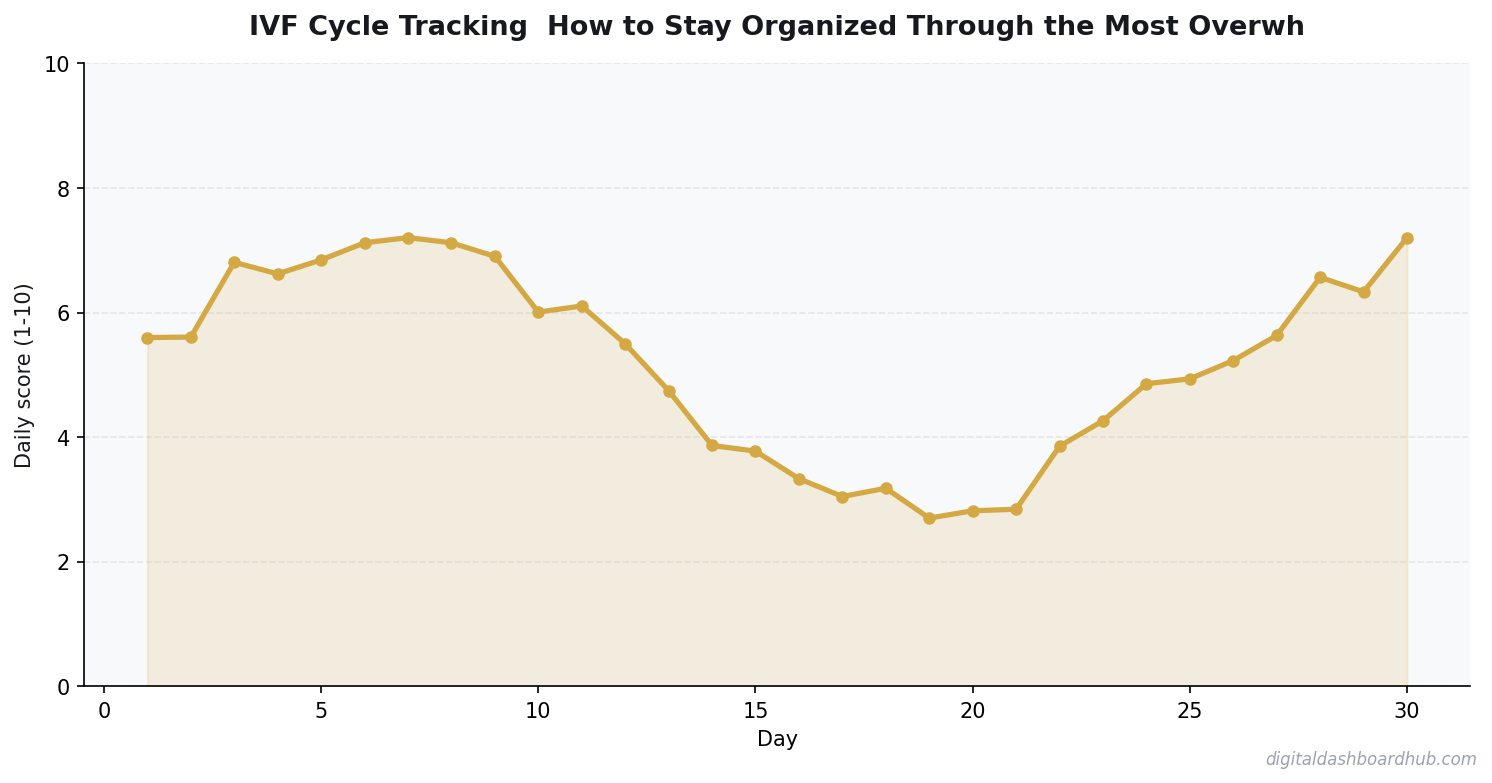
Log your emotional state alongside the clinical data — not for diagnostic purposes, but for your own memory. Cycles blur together. If you go through multiple cycles, having a record of what each one felt like at each stage is useful both for your own processing and for conversations with a therapist, counselor, or support group. You’re not just tracking a medical procedure. You’re navigating one of the more intense experiences a person can go through, and having documentation of it is a form of care for yourself.
What IVF Tracking Actually Needs to Cover
The medical protocol is only part of what you’re managing during an IVF cycle. There’s the medication schedule — injections at specific times, trigger shots timed to the minute. There’s the monitoring appointment cadence — follicle scans every 1-3 days during stimulation, each one with numbers you need to remember and questions you need to ask. There’s the financial tracking — each cycle costs $12,000-$25,000 out of pocket in many markets, and insurance coverage, if any, often has complex rules about what qualifies. And then there’s the emotional reality of going through all of that, which most tracking systems don’t acknowledge at all.
The couples who navigate IVF best are the ones who externalize the tracking completely. When everything lives in your head, the cognitive load alone is exhausting — and the emotional stakes mean any missed detail feels catastrophic. When everything is logged in a system, you can simply check the system.
What to Track at Each Stage
Stimulation phase (days 1-12 approximately): Daily injection times and medication names/doses — this matters if you have a protocol adjustment mid-cycle. Follicle counts and sizes at each monitoring scan. Estradiol levels if your clinic shares them. Physical symptoms — bloating, discomfort — which are relevant for OHSS risk assessment.
Retrieval and fertilization: Number of eggs retrieved, number mature, fertilization report, and day-3 or day-5 embryo counts and grades. These numbers tell a story about egg quality and fertilization efficiency that matters for future cycles if this one doesn’t result in transfer.
Transfer phase: Lining measurement and pattern at transfer readiness check, embryo grade of transferred embryo(s), transfer date, and progesterone support protocol. The 10-14 days between transfer and beta test deserve their own symptom log — not to obsess, but because some symptoms can be clinically relevant if you need to discuss the outcome with your RE.
Managing the Financial Side of IVF
IVF costs are complex and often surprising. The quoted “per cycle” cost typically covers the core procedure (egg retrieval, fertilization, transfer) but often excludes medications ($3,000-$6,000/cycle depending on protocol), embryo freezing fees ($500-$1,000 upfront plus $500-$800/year storage), genetic testing (PGT-A, if recommended, adds $2,000-$3,500), and cycle monitoring appointments. The all-in cost per cycle in most US markets is $18,000-$30,000.
Insurance coverage varies enormously — 19 states have some form of fertility coverage mandate, but the specifics of what’s covered and how many cycles are authorized differ widely. If you have employer-sponsored insurance, review the fertility benefit carefully before starting — some large employers (particularly tech companies) offer $20,000-$50,000 in fertility benefits, and knowing your coverage before incurring costs can fundamentally change your financial plan.
Track all IVF-related expenses as you incur them, not in a lump sum at year end. Medical expenses exceeding 7.5% of adjusted gross income may be deductible — IVF medications, monitoring, and procedures all qualify. This is one of the larger potential tax deductions available to people in IVF, and documenting it requires having the expense records organized by year-end.
Navigating Multiple Cycles
The majority of people who achieve a live birth through IVF do so after multiple cycles — not one. The CDC’s national average is approximately 2.5 fresh cycles per live birth for women under 35, and higher for women over 35. This isn’t meant to be discouraging — it’s planning information. Going into IVF with the expectation that it might take 2-3 cycles, and planning financially and emotionally for that scenario, puts you in a much better position than planning for a single cycle and being caught off guard.
The tracking system becomes increasingly valuable with each cycle. Your second cycle protocol will likely be adjusted based on first-cycle response data — how many follicles you stimulated, your peak estradiol, your fertilization rate. Clinicians use this data to change medication doses and timing. Your own records give you a way to understand those adjustments and ask informed questions, rather than being a passive recipient of protocol decisions you don’t understand.
If you’re going into a second or third cycle, bring your detailed records from previous cycles to your consultation. Not a verbal summary — the actual numbers, dates, and outcomes. A good reproductive endocrinologist uses that data to optimize the next attempt. Your tracker is the tool that makes that data available.
The Emotional Reality Nobody Prepares You For
IVF involves a level of hope and fear that most life experiences don’t come close to. Tracking supports the emotional experience because it gives you something concrete and productive to do during a process where you have very little control. You can’t make more eggs respond to stimulation. You can track what happened at each scan so you’re prepared for the next conversation with your team.
Log your emotional state alongside the clinical data — not for diagnostic purposes, but for your own memory. Cycles blur together. If you go through multiple cycles, having a record of what each one felt like at each stage is useful both for your own processing and for conversations with a therapist or support group. You’re not just tracking a medical procedure. You’re navigating one of the more intense experiences a person can go through, and having documentation of it is a form of care for yourself.
Keep reading (related guides):
- Free Menopause Symptom Tracker — Try It Now
- Free PCOS Symptom Tracker Dashboard — Try It Now
- Postpartum Recovery Tracking: What to Monitor in the First 12 Weeks (That Nobody Talks About)
- The Complete Guide to Fertility Tracking: Charts, Symptoms What Your Cycle Is Telling You
- Sinking Fund Savings Goal Planner: The Free Visual Dashboard That Kills Surprise Expenses
255+ interactive tools for your money, time, and health.
Full features for 14 days · Secure payment · Stop anytime
Keep Reading
- I Tested 9 Expense Tracker Apps for 3 Months — Here’s What Actually Worked
- How to Regulate Your Nervous System: 8 Steps to Move From Chronic Stress to Calm
- I Tracked My Nervous System for 90 Days — Here’s What I Learned About My Stress, Sleep, and Sanity

Andy Gaber is the founder of Digital Dashboard Hub, a suite of 255+ interactive financial, productivity, and wellness tools. He built DDH after getting frustrated with financial apps that gave outputs without context. Follow along for tool tutorials, revenue analytics breakdowns, and honest takes on personal finance.