wedding-vendors-don-t-put-prices-on-their-websites-here-s-why-that-costs-you”>Wedding Vendors Don’t Put Prices on Their Websites — Here’s Why That Costs You
You’ve emailed 12 photographers and gotten zero pricing. “Let’s schedule a call to discuss your vision” is vendor-speak for “I’ll quote you based on how expensive your engagement ring looks.” The lack of pricing transparency in the wedding industry costs couples thousands of dollars because you can’t negotiate what you can’t benchmark. Walking into a vendor meeting without knowing the going rate is like buying a car without checking Kelley Blue Book.
I’ve collected pricing data from hundreds of vendor contracts, wedding forums, and industry surveys. The real answer every major vendor actually charges in 2026 — no “schedule a call” required.
2026 Wedding Vendor Pricing: National Averages
Regional Price Differences Are Massive
The same photographer charging $2,500 in Nashville charges $6,000 in Manhattan and $4,000 in San Francisco. Here’s the regional multiplier you should apply to national averages:
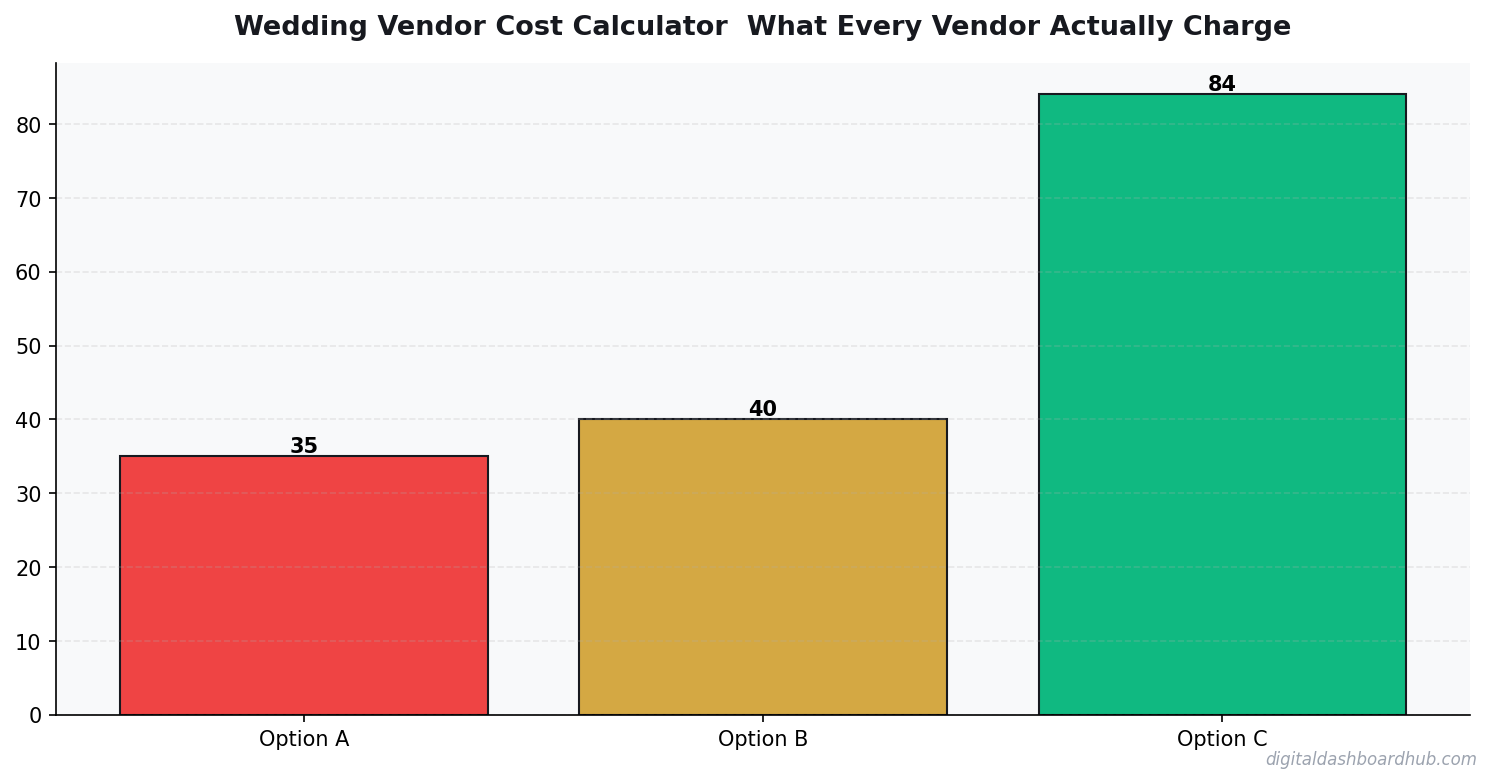
A “budget” wedding in NYC costs more than a “premium” wedding in rural Ohio. Location is the single biggest variable in your total cost.
Where Couples Blow Their Budget (and Where to Save)
The Budget Killers
- Guest count: Every additional guest costs $75-$200 in catering, drinks, favors, and rentals. Cutting 20 guests saves $1,500-$4,000. This is the most powerful budget lever you have.
- Open bar: Unlimited top-shelf for 150 guests runs $5,000-$12,000. Beer/wine only cuts it by 40-60%. A consumption bar (pay per drink) saves even more.
- Flowers: This is where sticker shock hits hardest. A single bridal bouquet with peonies and garden roses costs $250-$500. Ceremony arch? $1,500-$5,000. Centerpieces at $75-$200 each times 15-20 tables adds up fast.
The Smart Saves
- Friday or Sunday weddings save 20-40% on venue and most vendors.
- Off-season (Nov-March, excluding holidays) saves 15-30%.
- Brunch or lunch receptions cost 30-50% less than dinner.
- Playlist instead of DJ saves $1,000-$2,000 (but only if someone manages it).
Want to build a vendor budget for your exact situation? The Digital Dashboard Hub wedding vendor calculator lets you select your region, guest count, and priorities — then generates a custom budget breakdown for every vendor category. No more guessing whether you can afford a videographer.
How to Negotiate With Vendors (Yes, You Can)
Most couples don’t realize vendor pricing has a 10-20% negotiation range. Three tactics that work:
- Book early and ask for an early-booking discount. 12+ months out, vendors have empty calendars and are more flexible.
- Bundle services. “If I book photo and video with your studio, what’s the package price?” Bundling typically saves 10-15%.
- Name your budget honestly. “We love your work but our photography budget is $3,500. Is there a package that works at that price?” Many photographers have unlisted packages for lower budgets with fewer hours or no album.
Three Steps to Get Started
- Right now: Decide your total budget and guest count. Those two numbers determine everything else. The formula: total budget / guest count = your per-person budget. Under $150/person? You’re in budget territory. Over $300? Premium.
- This week: Use a vendor cost calculator to allocate your budget across all vendor categories based on your priorities. Spend more where it matters to you, less where it doesn’t.
- Long game: Book venue and photographer first (they book out 12-18 months). Everything else can wait 6-9 months. Don’t rush into contracts without comparing at least 3 options per vendor.
Over 400 couples have planned their vendor budgets with our wedding cost tools this month. The ones who come in on budget aren’t the ones who spend less — they’re the ones who planned before they signed contracts. Build your vendor budget free.
What Vendors Actually Charge in 2026: A Realistic Breakdown
Here’s what a 150-person wedding in a mid-cost market actually looks like at the vendor level:
Venue: $8,500–$14,000 (includes tables, chairs, basic linens in most cases)
Catering: $90–$140 per person ($13,500–$21,000 for 150 guests)
Photography: $3,500–$5,500 (8-hour coverage, one photographer)
Videography: $2,500–$4,000 (ceremony + reception highlight reel)
Florals: $4,000–$8,000 (ceremony arch, reception centerpieces, bridal bouquet)
DJ or band: $1,500–$2,500 DJ / $8,000–$15,000 band
Hair & makeup: $800–$1,500 for bride + 2 attendants
That’s $34,300–$56,500 before the dress, rings, invitations, cake, or honeymoon. Most couples discover this around month 8 of planning when the budget math stops adding up.
The Vendor Cost Traps Most Couples Fall Into
The “customization tax.” Every time you ask a vendor to do something slightly different from their standard package, you’re paying a premium. Custom cake design, a non-standard ceremony time, requesting raw photo files — these add $200-$800 each without feeling like big decisions in the moment. They compound.
Gratuity isn’t optional. Standard expectations: 15-20% for caterers and bartenders, $100-200 for photographers and videographers, $50-100 for hair/makeup artists. Budget this in upfront or you’ll be scrambling at checkout on the wedding day.
The travel fee surprise. If any vendor is driving 60+ minutes, expect a travel fee of $150-400 that wasn’t in the initial quote. Ask about it during the first call, not after you’ve fallen in love with them.
Negotiating With Vendors: What Actually Works
Most couples approach vendor negotiation wrong — they ask for a discount, get a polite “no,” and assume that’s the end of it. The more effective approach is to ask what’s flexible rather than asking for less money. Can they do a Sunday instead of Saturday (often 15-25% less)? Can they swap one service element for another that costs them less but matters more to you? Can you book early in exchange for a better rate?
Photographers and videographers often have more flexibility than venues or caterers. A photographer who has your date open but no confirmed booking might negotiate a $300-400 reduction rather than leave it empty. The ask is easy: “Is there any flexibility on the package price if we book this week?” The worst they say is no. Most of the time, there’s something they can do.
When to Walk Away From a Vendor
Not every vendor is right for your wedding regardless of price. Walk away if a vendor is slow to respond during the booking process — that’s a preview of what you’ll experience when there’s a real problem. Walk away if the contract has one-sided cancellation clauses that protect the vendor completely at your expense. And walk away if your gut says the person doesn’t care about your event specifically. You’re hiring humans, not just services. The relationship matters.
Keep reading (related guides):
- True Cost of Your Mortgage Calculator: Its More Than the Payment
- Rental Property ROI Calculator: Is This Deal Actually Worth It?
- Wedding Budget Breakdown: Where Every Dollar Should Go (Free Calculator)
- Homeownership vs. Renting for 30 Years: The Complete Financial Comparison
- Bakery Revenue Calculator
255+ interactive tools for your money, time, and health.
14 days free · No charge today · 2-click cancel
Keep Reading
- How Sinking Funds Saved Me From Financial Emergencies
- Sinking Fund Savings Goal Planner (Free Tool)
- Why Traditional Budgets Fail ADHD Brains
Common Questions About Wedding Vendor Cost Calculator: What Every Vendor Actually Charges
How long does it take to see results?
Most people see meaningful progress within 30-90 days when they apply these strategies consistently. The key is tracking your numbers from day one so you have a baseline to measure against.
What’s the biggest mistake people make?
Trying to do everything at once. Pick one or two strategies from this guide, implement them fully, then layer in additional tactics. Spreading yourself thin is the fastest way to see no results from any of it.
Do I need special tools or software?
Not necessarily to start — but the right tools eliminate hours of manual work. Our free calculators and trackers at Digital Dashboard Hub are a good starting point before you invest in paid software.

Andy Gaber is the founder of Digital Dashboard Hub, a suite of 255+ interactive financial, productivity, and wellness tools. He built DDH after getting frustrated with financial apps that gave outputs without context. Follow along for tool tutorials, revenue analytics breakdowns, and honest takes on personal finance.