wedding-pricing-is-intentionally-opaque-let-s-fix-that”>Wedding Pricing Is Intentionally Opaque — Let’s Fix That
You requested a quote from a wedding photographer and got back “starting at $3,500” with no explanation of what that includes. Then the florist quoted $4,200 for “lush arrangements” and you have no idea if that’s normal or highway robbery. The wedding industry thrives on keeping you in the dark about what things actually cost.
I compiled real 2026 pricing data from vendor directories, industry surveys, and published rate cards to give you the actual numbers — by vendor type, service level, and region. So when you get a quote, you’ll know exactly where it falls.
The Average 2026 Wedding: Where the Money Goes
The Knot’s 2025 Real Weddings Study (the most recent comprehensive dataset, covering weddings through December 2025) puts the average wedding cost at $35,000, with the median at $28,000. When you strip out outliers (destination weddings and $100K+ events), the typical “nice wedding” in a mid-cost market runs $22,000-$32,000.
Here’s the standard budget allocation:
Source: The Knot 2025 Real Weddings Study, WeddingWire Cost Guide (updated January 2026).
Vendor-by-Vendor Breakdown: What You’re Actually Paying For
Photography: $1,500 – $8,000+
The biggest price range of any vendor, and the most confusing. After testing the tiers actually mean:
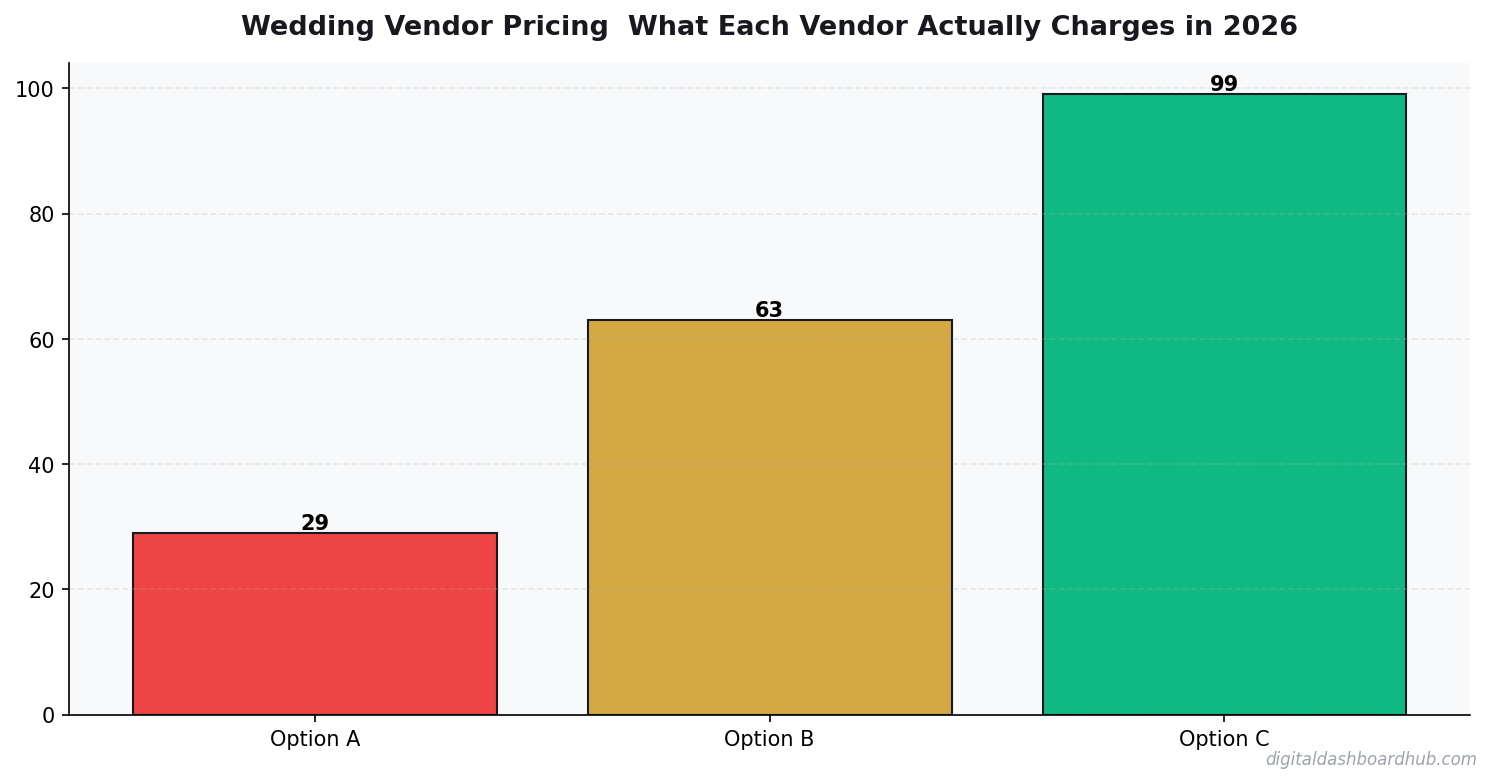
$1,500-$2,500 (Budget): Newer photographers (1-3 years experience), 6-8 hours coverage, 300-500 edited images, online gallery, no album. Perfectly fine for many weddings — some of the best photos I’ve seen came from talented photographers still building their portfolio.
$3,000-$5,000 (Mid-Range): Experienced photographers (5+ years), 8-10 hours, second shooter included, 500-800 edited images, engagement session, online gallery with print rights. This is the sweet spot for most couples.
$5,000-$8,000+ (Premium): Award-winning or in-demand photographers, full-day coverage, two shooters, 800+ images, album included, engagement session, print credits. You’re paying for a specific artistic vision and a proven track record.
My recommendation: spend here. Photos are the only thing that lasts. Twenty years from now, nobody remembers the centerpieces, but everyone pulls out the photo album.
Catering: $50-$250+ Per Person
$50-$75/person: Buffet style, standard menu options, basic bar package. This is what most budget weddings look like, and honestly, a great buffet beats a mediocre plated dinner every time.
$85-$150/person: Plated dinner, choice of entree, upgraded bar (premium liquor, craft cocktails), late-night snack station. The standard “nice wedding” catering experience.
$150-$250+/person: Fine dining, custom menus, sommelier-selected wine pairings, elaborate dessert displays, raw bar. This is where you’re making a statement.
For a 120-person wedding, the catering tab alone ranges from $6,000 (budget buffet) to $30,000+ (premium plated). This is the single biggest line item and the one with the most room to adjust.
Flowers and Decor: $1,000 – $6,000+
Flowers are where sticker shock hits hardest. A single bridal bouquet runs $150-$350. Bridesmaid bouquets are $65-$125 each. Boutonnieres are $15-$30 each. Ceremony arch florals start at $300 and go to $2,000+. Table centerpieces run $75-$250 each — multiply that by 15-20 tables.
Where to save: Choose in-season flowers (peonies in spring, dahlias in fall — not peonies in November). Use greenery-heavy arrangements instead of all-bloom centerpieces. Skip the pew markers. Use the ceremony flowers as reception decor (your florist can relocate them).
DJ: $800 – $3,000+
$800-$1,200: 4-5 hours, basic sound system, limited lighting. Fine for smaller or more casual weddings.
$1,500-$2,500: Full reception (5-6 hours), ceremony sound, cocktail hour music, professional lighting package, MC duties, dance floor management. The standard package most couples book.
$2,500-$4,000+: Premium sound, intelligent lighting, photo booth add-on, live mixing, multiple environments. The “party” DJ who transforms the reception.
Wedding Planner/Coordinator: $800 – $6,000+
Day-of coordinator ($800-$1,500): Manages the actual wedding day logistics. Doesn’t help with planning or vendor selection. Worth every penny — you don’t want to be answering your caterer’s questions while getting your hair done.
Partial planning ($2,000-$3,500): Vendor recommendations, timeline creation, budget management, plus day-of coordination. Good for couples who want to make the decisions but need professional guidance.
Full planning ($4,000-$6,000+): Everything from venue selection to final cleanup. They manage the entire project. Best for busy couples or anyone planning from a distance.
Regional Price Differences: Where You Get Married Matters
Source: The Knot 2025 Real Weddings Study, regional averages.
A $30,000 wedding in Nashville is a $42,000 wedding in New York. Same quality, same guest count, same vendor tier — just a different zip code.
How the DDH Wedding Budget Calculator Handles This
Planning a wedding budget on a generic spreadsheet means you’re guessing at half the numbers. The DDH Wedding Budget Calculator starts with your total budget, your guest count, and your region, then allocates across vendor categories using the percentages that actually reflect 2026 pricing.
The tool lets you adjust priorities — if photography is your top priority, it reallocates from categories where you’ve indicated you want to save. It also tracks actual vs. budgeted spending as you book vendors, so you always know where you stand.
The vendor comparison feature is particularly useful: input quotes from multiple vendors in each category, and it normalizes them by what’s included (hours of coverage, number of edited photos, etc.) so you’re comparing apples to apples.
Free resource: Sign up for a trial and download the “2026 Wedding Vendor Pricing Cheat Sheet” — a printable reference with national averages and regional adjustments for every vendor category.
Where to Splurge vs. Where to Save: The Data-Driven Answer
Splurge On
Photography: The only vendor whose work you’ll look at for decades. The difference between a $2,000 and $4,000 photographer is often massive in consistency and editing quality.
Food quality (not quantity): Guests remember bad food forever. You don’t need a 5-course meal — you need good food, well-served. A premium buffet often beats a cheap plated dinner.
Day-of coordinator: Even if you plan everything yourself, pay someone $800-$1,500 to execute on the actual day. Your future self will thank you.
Save On
Invitations: Minted and Canva produce beautiful invitations for $1-$3 each. Nobody frames the invitation (despite what the stationery industry claims).
Favors: Most end up in the trash or left behind on tables. Skip them entirely or do something consumable (a cookie, a small bottle of hot sauce). Do not spend $5-$10/person on favors.
Flowers: The single easiest category to cut without anyone noticing. Use candles and greenery for centerpieces. Skip the elaborate ceremony arch. A beautiful $150 bridal bouquet photographs just as well as a $350 one.
Try This Today
- Set your hard budget ceiling. Not “we’d like to spend around $25K” — a firm number you won’t exceed. Then allocate using the percentages above, adjusted for your priorities. The DDH Wedding Budget Calculator makes this take 10 minutes instead of a weekend.
- Get 3 quotes for every vendor category. Not because the cheapest is always best — but because you need reference points to know if a quote is reasonable for what’s included.
- Book your venue first, then photography, then everything else. These two book earliest and have the most impact on your experience. Everything else can come later without sacrificing quality.
Over 5,000 couples have used our wedding budget tools to plan their day without the financial anxiety. The ones who enjoy their wedding most aren’t the ones who spent the most — they’re the ones who knew exactly where their money was going.
Keep reading (related guides):
- True Cost of Your Mortgage Calculator: Its More Than the Payment
- Rental Property ROI Calculator: Is This Deal Actually Worth It?
- Wedding Budget Breakdown: Where Every Dollar Should Go (Free Calculator)
- Homeownership vs. Renting for 30 Years: The Complete Financial Comparison
- Bakery Revenue Calculator
255+ interactive tools for your money, time, and health.
14-day trial · Stripe checkout · Cancel anytime
Keep Reading
- How Sinking Funds Saved Me from Financial Emergencies
- Sinking Fund Savings Goal Planner (Free Tool)
- Freelancer Finance Dashboard: Track Income, Taxes, and Cash Flow

Andy Gaber is the founder of Digital Dashboard Hub, a suite of 255+ interactive financial, productivity, and wellness tools. He built DDH after getting frustrated with financial apps that gave outputs without context. Follow along for tool tutorials, revenue analytics breakdowns, and honest takes on personal finance.