
The $4,200 I Almost Handed to the IRS
Jump in: the tool below is live and free to play with. Upgrade to a dashboard account when you want to save scenarios and track over time.
Last January, I sat down with a shoebox of receipts, three credit card statements, and the sinking feeling that I’d been overpaying on taxes for years. I was right.
After tracking every single business expense for 12 months — obsessively, categorically, sometimes while standing in a Costco parking lot photographing receipts — I found $4,200 in legitimate deductions I’d been leaving on the table. Not because I was doing anything shady before. Because I was lazy about tracking, and lazy tracking is the IRS’s favorite taxpayer behavior.
This isn’t a story about tax tricks. It’s the step-by-step system I built to capture every deductible dollar, the categories most self-employed people miss entirely, and the tools that made it possible without turning me into an accountant.
Why Most Self-Employed People Overpay Taxes
The standard advice is “keep your receipts.” That’s like telling someone to lose weight by “eating less.” Technically true, operationally useless.
Here’s the real problem: most solopreneurs track the obvious expenses — software subscriptions, office supplies, maybe a laptop — and completely ignore the gray-area deductions that add up to thousands. Things like mileage to a co-working space, the percentage of your phone bill used for business, or the home office deduction that you’re “not sure” qualifies.
The IRS doesn’t reward uncertainty. They reward documentation. And documentation requires a system, not a shoebox.
The 8 Expense Categories Most Freelancers Miss
Before I built my tracking system, I did a full audit of what I’d been claiming versus what I legally could claim. The gap was embarrassing. Here are the categories that were costing me the most:
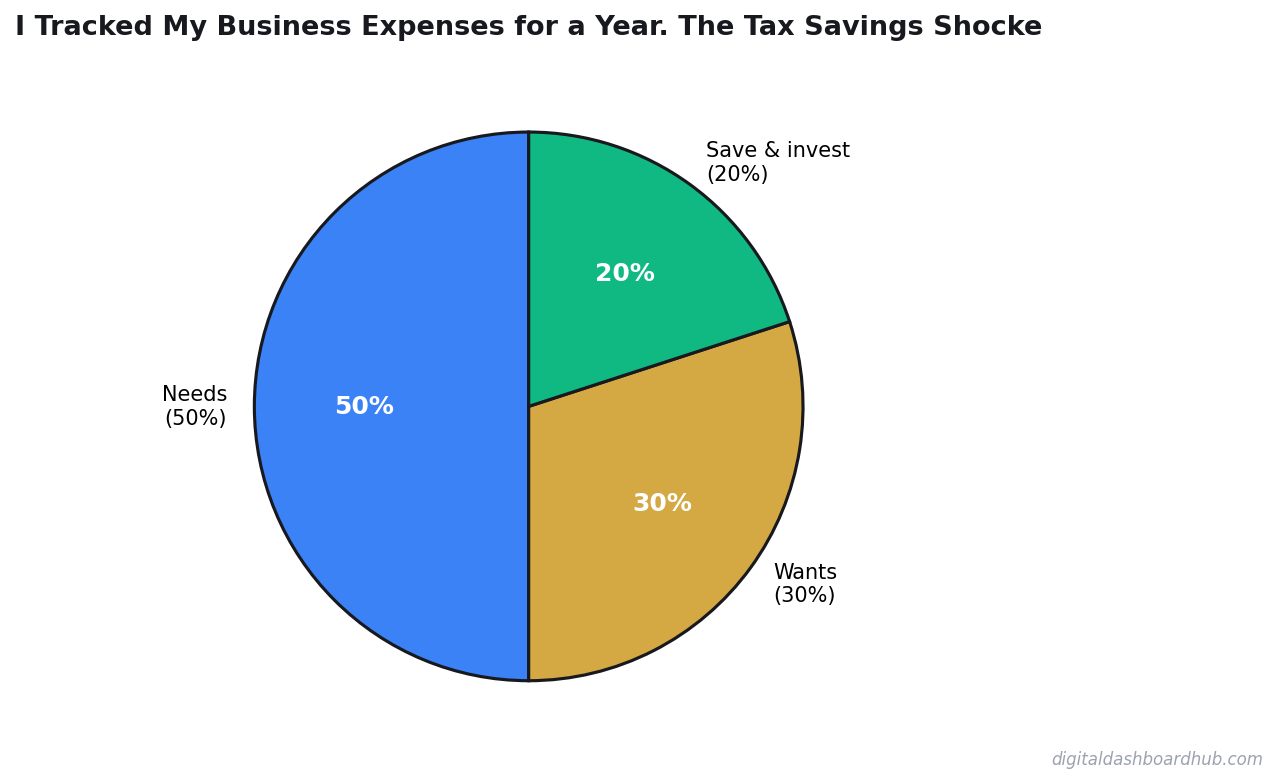
Total missed: roughly $4,200 in deductions. At a 24% effective tax rate, that’s over $1,000 back in my pocket. For doing nothing different except writing things down.
Step 1: Set Up Your Expense Categories Before January 1
The biggest mistake is starting to track without a framework. You’ll capture some expenses, miss others, and spend hours in March trying to figure out which category “that weird Staples charge” belongs in.
I set up 12 categories based on Schedule C line items. Not custom categories that made sense to me — the actual categories the IRS uses. This meant zero translation work at tax time. Every expense I logged mapped directly to a tax form line.
The core categories: advertising, car/truck expenses, contract labor, insurance, office expense, supplies, travel, meals, utilities, professional services, education, and other. If an expense doesn’t fit one of those, it’s probably not deductible (or you need to talk to a CPA).
Step 2: Build a Daily 2-Minute Capture Habit
I tried weekly expense logging. Lasted three weeks. I tried “whenever I remember.” Lasted four days. The only thing that stuck was a daily 2-minute capture at the same time every day — right after my morning coffee.
The process is dead simple: open my expense tracker, log yesterday’s business transactions, snap photos of any physical receipts, done. Two minutes. Sometimes three if I had a busy spending day. The key is that it’s so short there’s no excuse to skip it.
By month three, it was automatic. I’d sit down with coffee, open the tracker, log four or five items, and move on. The entire year’s worth of data was captured in roughly 12 hours of total effort spread across 365 days.
Step 3: Track Mileage — It’s the Biggest Hidden Deduction
The IRS mileage rate for 2026 is $0.70 per mile. I drive about 1,600 business miles per year — client meetings, the co-working space, post office runs, supply trips. That’s $1,120 in deductions I was leaving on the table because tracking mileage felt annoying.
The approach: I started using a simple mileage log. Date, destination, purpose, miles. That’s it. I keep it in the same tracker as my other expenses. No separate app, no GPS tracking, no fuss. Just four fields per trip.
If you’re a freelancer who drives to any business-related location more than twice a week, you’re probably sitting on $500-$2,000 in unclaimed mileage deductions right now.
How the DDH Business Expense Tracker Handles This
Full transparency: after building my own janky spreadsheet system for six months, I switched to the Digital Dashboard Hub expense tracking tool. Not because spreadsheets don’t work — they do — but because the DDH tracker has IRS categories pre-built, auto-calculates deduction estimates in real time, and gives me a visual dashboard of where my money goes.
The part I use most is the quarterly tax estimate. Instead of guessing what I owe in estimated taxes, the tracker shows me my year-to-date deductions, estimates my effective tax rate, and tells me what my quarterly payment should be. I was over-paying estimated taxes by $200/quarter before I had this data. That’s $800 a year in cash flow I was handing over early for no reason.
The visual breakdown by category also caught something I wouldn’t have noticed in a spreadsheet: my software subscriptions had crept up to $512/year across 14 tools. I consolidated down to 8 and saved $180. The tracker didn’t tell me to do that — the bar chart just made it obvious.
Step 4: Separate Business and Personal Spending
This is the step everyone skips and regrets in April. If you’re running business expenses through your personal credit card, you’re creating a nightmare for yourself at tax time and a red flag if you’re ever audited.
Get a separate business credit card. Get a separate business checking account. Route all business income and expenses through those accounts. It takes 30 minutes to set up and saves 10+ hours at tax time. I switched to a business card in February of my tracking year, and the difference in end-of-year clarity was night and day.
Bonus: most business credit cards offer 1.5-2% cash back. On $15,000 in annual business expenses, that’s an extra $225-$300 per year. Free money for doing what you should be doing anyway.
Step 5: Run a Quarterly Deduction Audit
Every quarter, I spend 30 minutes reviewing my expense categories and asking one question: “What am I paying for that I forgot to log?” This is how I caught $361 in professional development expenses I’d missed — a book here, a webinar there, a professional association membership that auto-renewed and I never thought to categorize.
The quarterly audit also forces you to look at your bank statement with fresh eyes. In Q2, I found a $29/month subscription I wasn’t using. In Q3, I realized I’d been paying for a tool that offered a free tier for my usage level. Neither of those are deduction issues — they’re just waste that tracking exposed.
Here’s a quarterly audit checklist that works: review every subscription charge, check for uncategorized transactions, verify mileage logs are current, and estimate your quarterly tax payment. Thirty minutes, four times a year. Two hours total that saves thousands.
The Home Office Deduction: It’s Simpler Than You Think
I avoided the home office deduction for years because I’d heard it was an “audit trigger.” That’s a myth that costs freelancers real money. The simplified method lets you deduct $5 per square foot of home office space, up to 300 square feet (max $1,500). No complex calculations, no measuring your entire house, no receipts for utilities.
My office is 180 square feet. That’s $900 in deductions using the simplified method. If you have a dedicated space in your home where you work — not your kitchen table, an actual space used primarily for business — you qualify. I spent two years leaving $900/year on the table because of tax folklore.
The regular method can yield even more if your home office is a large percentage of your home’s square footage, but for most people, the simplified method is the right call. Less paperwork, less audit risk, still a meaningful deduction.
What a Year of Tracking Actually Taught Me
The tax savings were great. But the real value of tracking every expense for a year was understanding where my business money actually goes — not where I thought it went.
I thought my biggest expense category was software. It was actually vehicle costs. I thought I spent maybe $100/year on professional development. It was over $400 when I counted every book, course, and membership. I thought my phone bill wasn’t worth tracking. It added $780 to my deductions.
The data changed how I spend, not just how I file. I negotiated a lower rate on my business insurance after seeing the annual cost in context. I batch my errands to reduce mileage waste. I actually think about whether a $15/month tool is earning its keep because I can see it in the dashboard, staring at me.
Mid-Article Bonus: The Receipt Rule That Saved My Audit
A colleague got audited last year and lost $2,300 in deductions because she couldn’t produce receipts for expenses over $75. The IRS requires documentation for individual expenses over $75, plus all lodging expenses regardless of amount. My system handles this automatically — I photograph every receipt the day I get it and attach it to the expense entry.
Digital receipts (email confirmations, online order histories) count. You don’t need paper. But you need something, and “I definitely bought that” is not something. The two-minute daily habit captures receipts when they’re fresh. Trying to reconstruct 11 months of receipts in March is a recipe for lost deductions.
Start With This
Step 1: Set up your 12 expense categories using IRS Schedule C line items. Do this today — it takes 15 minutes.
Step 2: Start the daily 2-minute tracking habit tomorrow morning. Log expenses, snap receipts, move on.
Step 3: Try the DDH expense tracker free to get pre-built categories, real-time deduction estimates, and a visual dashboard that makes tax time painless instead of panic-inducing.
You Might Also Like
- The Side Hustle Tax Trap: Track Every Dollar
- Freelancer Tax Guide 2026: What to Track All Year
- Freelancer Finance Dashboard: Income, Taxes, and Cash Flow
Keep reading (related guides):
- Business Expense Tracker: Categorize and Export for Tax Time
- How Much Money You Need to Retire Early at 40, 45, and 50 (Real Numbers by Age)
- Etsy Revenue by Niche: Which Categories Make the Most Money in 2026?
- I Almost Opened a Gym. The Revenue Calculator Saved Me $200,000.
- Free Menopause Symptom Tracker — Try It Now
255+ interactive tools for your money, time, and health.
Instant signup · Stripe-secure · Cancel in one click

Andy Gaber is the founder of Digital Dashboard Hub, a suite of 255+ interactive financial, productivity, and wellness tools. He built DDH after getting frustrated with financial apps that gave outputs without context. Follow along for tool tutorials, revenue analytics breakdowns, and honest takes on personal finance.