Use the free Bakery Revenue Calculator below — plug in your real numbers and get instant results. No signup required for the lite version.
Try the Bakery Revenue Calculator
Bakery Revenue Calculator
Enter your numbers below — results update instantly
Want the full Bakery dashboard with expense tracking, break-even analysis, and growth projections?
Why This Matters
Running numbers in your head is how bad financial decisions happen. A quick calculation with real data beats a gut feeling every single time. I built this tool because I was tired of spreadsheet gymnastics just to answer basic questions about my finances.
The calculator above handles the basics. But if you need trend tracking, scenario comparison, and exportable reports — the full version inside Digital Dashboard Hub does all of that and more.
What You Get in the Full Dashboard
| Approach | Startup Cost | Time Investment | Revenue Potential | Best For |
|---|---|---|---|---|
| Solo operator | Low ($1K-$10K) | Full time | $60K-$200K/yr | Maximum margins, full control |
| Small team (2-5) | Medium ($10K-$50K) | Management + some fieldwork | $200K-$800K/yr | Scaling without losing control |
| DDH Revenue Tracker | Free trial | 5 min setup | N/A (profit tool) | Know your real numbers in real time |
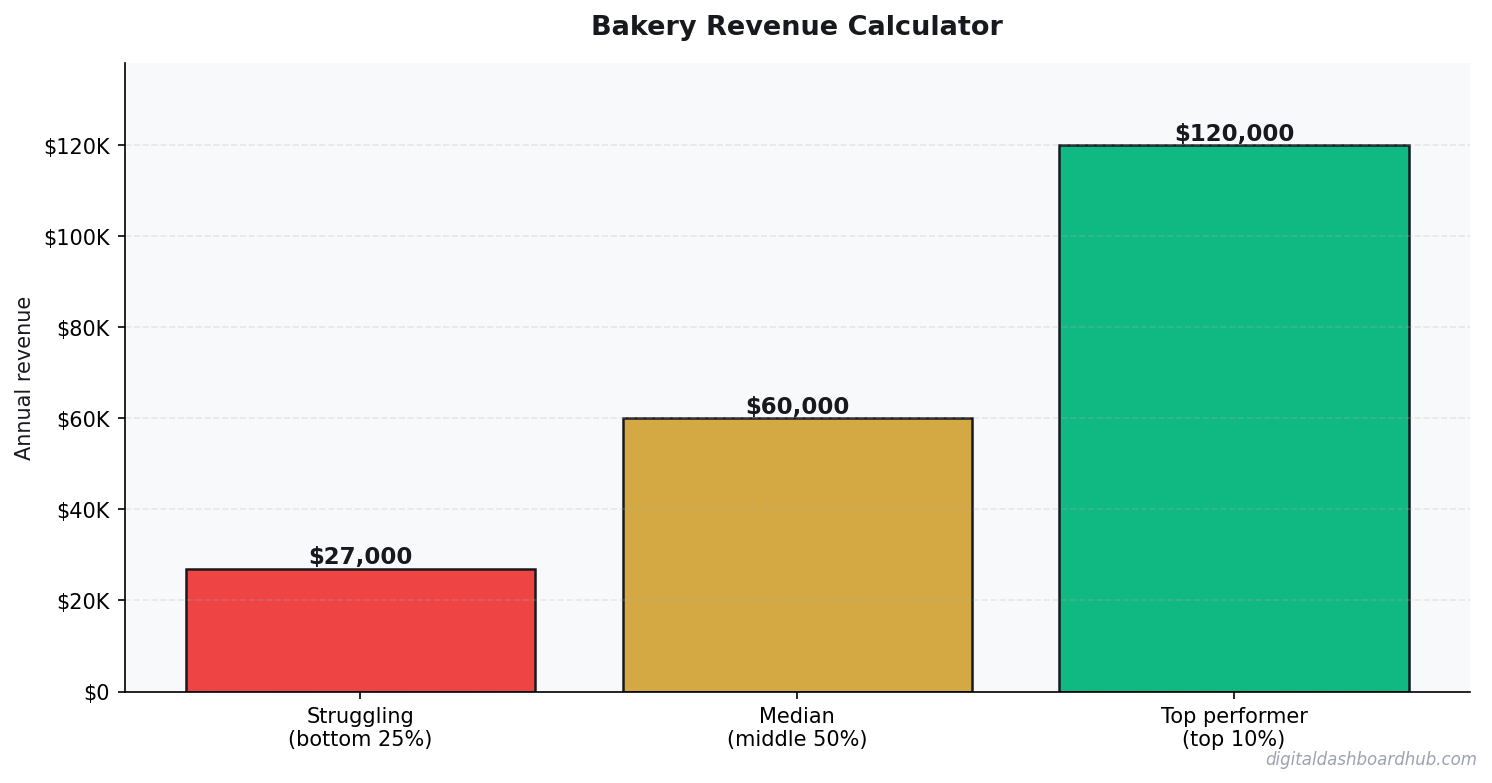
The full Bakery Revenue Calculator inside DDH includes features the lite version above can’t offer:
- Historical tracking — see your numbers change over weeks and months
- Visual charts — bar graphs, trend lines, and breakdowns that make patterns obvious
- Scenario modeling — “what if I change X?” comparisons side by side
- PDF reports — export professional reports for partners, lenders, or your own records
- — one subscription covers every calculator and tracker in the library
How to Use This Tool
Step 1: Enter your actual numbers in the fields above. Don’t guess — pull from your bank statements or business records for the most accurate results.
Step 2: Read the output cards. They update instantly as you type. Play with different scenarios to see how small changes affect your bottom line.
Step 3: If you want to save your results, track changes over time, or run more advanced projections — start a free 14-day trial of the full dashboard. No credit card required.
Your Next Move
You’ve already done the hardest part — you looked at your numbers instead of avoiding them. Here’s what to do with that momentum:
- Right now (30 seconds): Bookmark this page so you can rerun the calculation next month
- This week: Pull your real numbers from your accounts and run them through the calculator above
- Long game: Try the full DDH dashboard — 261 tools, 14 days free, cancel anytime
Dive Deeper
- Never Work Again Calculator: The Exact Number by Age
- How to Track Your Anxiety and Actually Reduce It: A Data-Driven Approach to Managing Worry
- Free Menopause Symptom Tracker — Try It Now
Common Questions About Bakery Revenue Calculator
How long does it take to see results?
Most people see meaningful progress within 30-90 days when they apply these strategies consistently. The key is tracking your numbers from day one so you have a baseline to measure against.
What’s the biggest mistake people make?
Trying to do everything at once. Pick one or two strategies from this guide, implement them fully, then layer in additional tactics. Spreading yourself thin is the fastest way to see no results from any of it.
Do I need special tools or software?
Not necessarily to start — but the right tools eliminate hours of manual work. Our free calculators and trackers at Digital Dashboard Hub are a good starting point before you invest in paid software.
What a Real Bakery Actually Makes: The Numbers
A small retail bakery in a mid-size city — 800 sq ft, open Tuesday through Sunday, 2 full-time bakers plus the owner. They move 120 customer transactions per day averaging $18 (a mix of individual pastries, coffee, and boxed half-dozen orders). Daily gross: $2,160. Annual gross at 300 operating days: $648,000.
Cost of goods in a bakery runs high — ingredients, packaging, waste on unsold items adds up to 30-35% of revenue. Call it $214,000. Labor for 2 bakers at $18/hour plus benefits: $85,000/year. Rent at $3,500/month: $42,000. Utilities, equipment maintenance, POS, insurance: $38,000. Owner net: approximately $269,000 — on a $648K revenue bakery.
That’s a tight but workable margin, and it gets much better with wholesale. Adding 2-3 wholesale accounts (local cafes, restaurant supply) at even modest volume can add $80,000-$120,000 in revenue with almost no additional overhead, since you’re already baking anyway.
The 3 Revenue Levers That Matter Most in Baking
1. Wholesale vs. retail mix. Retail is high margin per unit but labor-intensive to sell. Every retail transaction requires a customer, a wait, a register interaction. Wholesale sells large quantities in a single order — your COGs are slightly higher due to volume pricing requirements, but your labor per dollar of revenue drops dramatically. The most profitable independent bakeries typically run 30-40% wholesale volume.
2. Custom order and event revenue. Wedding cakes, corporate event catering, custom birthday orders — these carry premiums of 40-80% over retail pricing and often require deposits that help smooth cash flow. Bakeries that build a reputation for custom work create a second revenue stream that insulates them from the day-to-day variance of foot traffic.
3. Waste reduction and menu efficiency. Unsold product at end of day is pure margin destruction. The best bakeries make strategic production decisions — baking enough to look full and abundant, not enough to have significant waste. Day-old pricing, staff meals, and wholesale “imperfect” batches all help, but the real discipline is in production planning. If you’re throwing out 15% of what you bake, fixing that alone can move your margin more than any pricing adjustment.
Common Bakery Mistakes That Kill Profit
Not pricing for true cost. Most independent bakeries underprice their products by 15-25% because they calculate ingredient cost but forget to factor in labor time, utilities, packaging, and waste. A croissant that takes 3 hours of lamination time isn’t a $3 product if you’re paying a baker $18/hour. The real cost basis — including a reasonable labor allocation per unit — often reveals that some beloved menu items are genuinely margin-negative at current retail prices.
The second mistake: no catering or wholesale revenue stream. The retail counter is high-overhead (requires staff, storefront, consistent foot traffic) and highly weather-dependent. A single wholesale account at a corporate cafeteria or upscale grocer can add $8,000-$15,000/month in steady revenue with one weekly order and delivery. Bakeries that ignore wholesale because “we’re a retail shop” are leaving reliable income on the table.
Third: over-assortment. Customers love variety, but every additional SKU adds production complexity, ingredient inventory, and waste risk. The most efficient bakeries offer 15-25 core products made excellently rather than 60 products made adequately. Seasonal rotations keep the menu feeling fresh without permanently expanding the core production burden.
The Wholesale vs. Retail Revenue Tradeoff
Retail margins are better per unit — a croissant sold at your counter for $4.50 earns more than the same croissant sold wholesale at $2.20. But retail requires foot traffic, staffing, and real estate. Wholesale sells volume without any of that overhead. The math tips in wholesale’s favor once you’ve filled your retail counter and have production capacity to spare.
The hybrid model — 60-70% retail, 30-40% wholesale — is the structure most profitable independent bakeries operate on. The wholesale accounts absorb overproduction that would otherwise go to waste, smooth out slow retail days, and provide predictable monthly revenue that helps with cash flow planning. Getting there takes active sales effort (calling cafes, restaurants, and specialty retailers) but pays off faster than most bakery owners expect.
Keep reading (related guides):
14 days free · No charge today · 2-click cancel

Andy Gaber is the founder of Digital Dashboard Hub, a suite of 255+ interactive financial, productivity, and wellness tools. He built DDH after getting frustrated with financial apps that gave outputs without context. Follow along for tool tutorials, revenue analytics breakdowns, and honest takes on personal finance.